
An emergency veterinary visit can feel stressful and unpredictable. Knowing what happens after you arrive—and why another pet may be treated first—can make the process easier to understand.
Emergency hospitals do not usually see patients in arrival order. They use triage to identify life-threatening problems and direct medical resources to the pets who need them most urgently. Stable pets may wait while the team stabilizes a patient who cannot safely wait.
If you are deciding whether your pet needs immediate care, review when to take a pet to the veterinarian. Difficulty breathing, collapse, active seizures, severe trauma, uncontrolled bleeding, inability to urinate, suspected poisoning, and signs of bloat require prompt emergency evaluation.
Before You Leave for the Emergency Vet
If it is safe and does not delay care, call the emergency hospital before leaving. The team may ask about your pet’s symptoms, when they started, possible injuries or exposures, and whether your pet can walk and breathe normally. Calling ahead can help the hospital prepare, but a phone conversation cannot replace an examination.
Bring or gather:
- Your pet’s medications, medical history, and known allergies
- Recent laboratory or imaging results, if available
- The packaging for any medication, chemical, plant, or food involved in a possible poisoning
- A list of symptoms and when each one began
- Photos or video of intermittent symptoms such as abnormal breathing, walking, or seizure activity
Use a carrier for cats and a leash or secure transport method for dogs. Pain and fear can make even a gentle pet react unpredictably, so keep your face and hands away from an injured pet’s mouth. Do not give human medications or induce vomiting unless a veterinarian or animal poison-control professional directs you to do so.
What Happens When You Arrive?
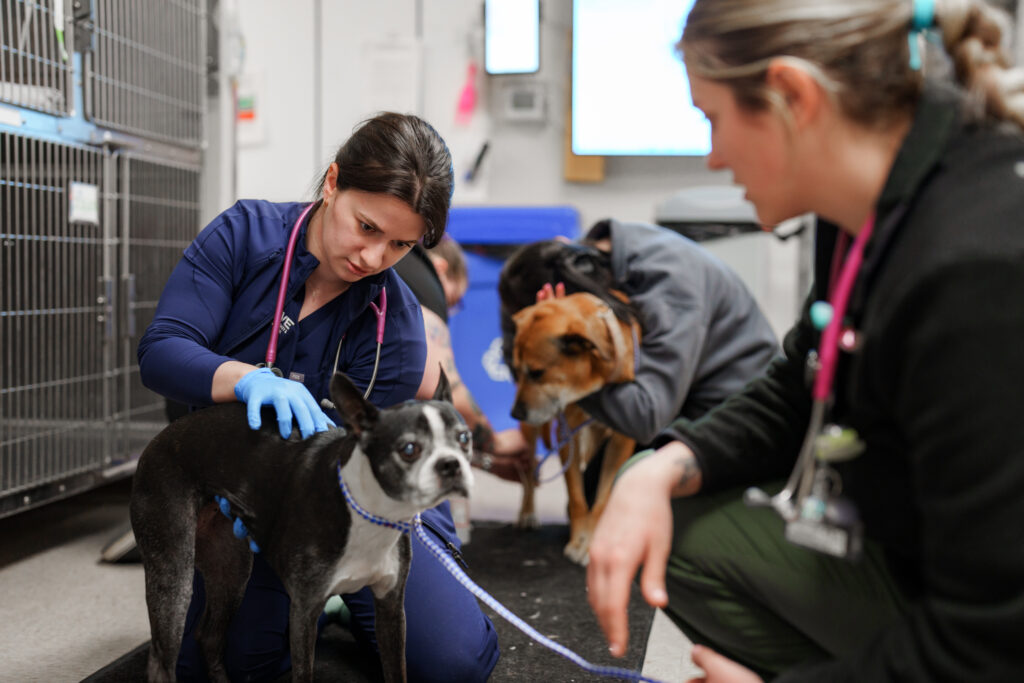
After check-in, a veterinary team member performs an initial assessment. You may be asked for a concise history while the team evaluates your pet’s most urgent needs. Depending on the situation, this initial assessment may include:
- Breathing effort and airway
- Heart rate, pulse quality, and circulation
- Gum color and hydration
- Level of consciousness and ability to stand
- Bleeding, pain, abdominal swelling, or evidence of trauma
A pet with an immediately life-threatening condition may be taken directly to the treatment area for stabilization before the veterinarian can have a longer conversation with the owner.
How Emergency Vet Triage Works
Triage is the process of sorting patients according to medical urgency. It is not a final diagnosis, and a pet’s priority can change if their condition improves or worsens.
Pets That May Need Immediate Stabilization
Examples include pets with:
- Severe breathing difficulty or abnormal gum color
- Collapse, unresponsiveness, shock, or extreme weakness
- Active or repeated seizures
- Major trauma or heavy bleeding
- Heatstroke or a severe allergic reaction
- Inability to urinate, especially in a male cat
- A swollen, painful abdomen with unsuccessful retching, which may indicate GDV or bloat
Pets That May Safely Wait
Stable problems can still be painful and deserve veterinary care, but they may wait while critical patients are treated. Depending on the individual pet, examples may include a mild limp, an ear problem, a small wound, mild digestive signs, or a chronic condition that has not suddenly worsened.
If your pet changes while waiting—such as developing breathing difficulty, worsening pain, repeated vomiting, weakness, or reduced responsiveness—tell a team member immediately so the pet can be reassessed.
Why Emergency Vet Wait Times Change
Emergency wait times are difficult to predict because the number and severity of incoming cases can change quickly. Important factors include:
The Number and Severity of Critical Patients
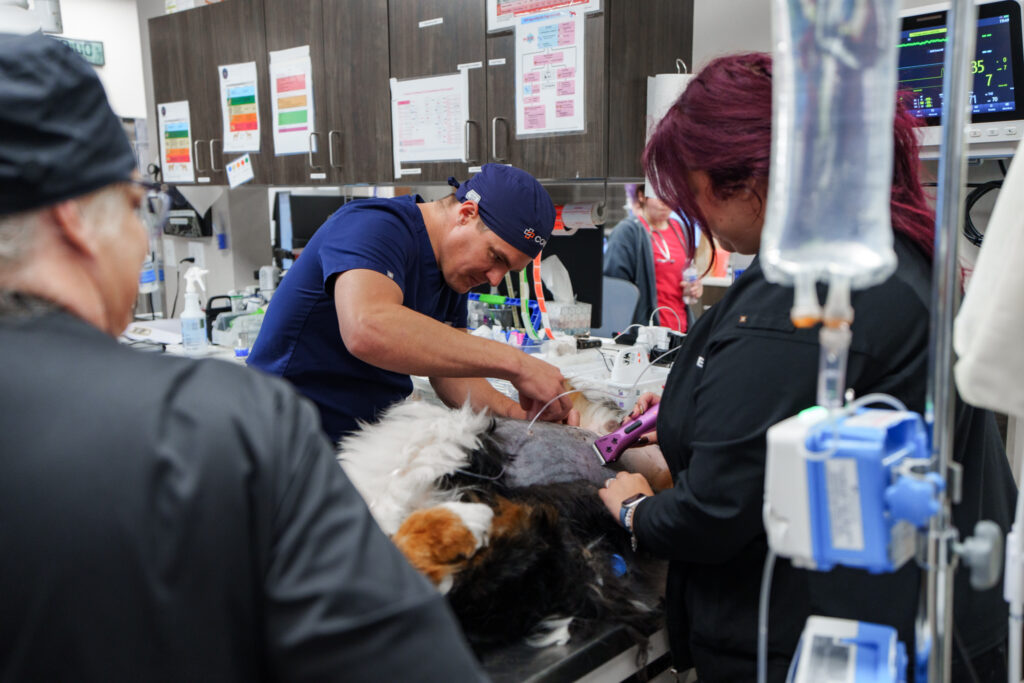
One unstable patient may need several veterinarians and technicians at once for oxygen, CPR, emergency medication, transfusion, surgery, or continuous monitoring. A newly arriving critical case can change the order in which stable patients are seen.
Hospital Capacity
Treatment space, staffing, inpatient needs, and the number of pets requiring isolation or intensive monitoring all affect patient flow.
Diagnostics and Procedures
Bloodwork, urine testing, X-rays, ultrasound, sedation, wound care, surgery, and consultation with another medical service take different amounts of time. Some tests also require preparation or interpretation before the veterinarian can recommend the next step.
Evenings, Weekends, and Holidays
Emergency hospitals often receive more patients when primary veterinary offices are closed. A wait estimate is therefore an estimate, not an appointment time.
Why It May Look Like Nothing Is Happening
Much of an emergency hospital’s work occurs in treatment areas that owners cannot see. A veterinary team may be providing oxygen, placing an intravenous catheter, controlling pain, performing imaging, monitoring anesthesia, preparing for surgery, or discussing test results with another clinician.
A pet who appears to “skip the line” may have arrived with a condition that could deteriorate within minutes. Treating that pet first does not mean the team has forgotten about stable patients.
The Emergency Examination and Diagnostic Plan
Once the veterinarian examines your pet, they will discuss the most likely concerns and recommend an initial plan. Depending on the problem, this may include:
- Bloodwork or blood-pressure measurement
- Urinalysis
- X-rays or ultrasound
- Electrocardiogram or oxygen monitoring
- Focused testing for infectious disease, toxins, or clotting problems
In a critical emergency, stabilization may begin before all testing is complete. Oxygen, intravenous access, pain relief, treatment for shock, seizure control, or bleeding control may take priority over a comprehensive diagnostic workup.
Treatment Recommendations, Estimates, and Consent
The veterinarian will explain recommended diagnostics and treatment, expected benefits, important risks, and available alternatives. The team may provide an estimate and ask for authorization before proceeding, except when immediate action has already been authorized or is necessary under the hospital’s emergency procedures.
Ask questions if anything is unclear. Emergency decisions are easier when everyone understands the immediate goal, what information a test may provide, and how the result could change treatment.
What Happens After the Initial Workup?
Depending on your pet’s condition, the next step may be:
- Treatment followed by discharge with home-care instructions
- Hospitalization for fluids, medication, oxygen, pain control, or monitoring
- An emergency procedure or surgery
- Consultation or transfer to another veterinary specialty service
- Follow-up with your primary veterinarian
Before leaving, confirm medication instructions, activity restrictions, feeding guidance, warning signs, recheck timing, and whom to contact if your pet worsens.
How Pet Owners Can Help During an ER Visit
- Provide a brief, accurate history and identify the most important recent change.
- Stay reachable for questions, estimates, and treatment authorization.
- Tell the team immediately if your pet’s condition changes.
- Keep contact details for your primary veterinarian available.
- Understand that updates may be delayed while the medical team manages an unstable patient.
For examples of conditions that require immediate attention, read the Top 10 pet emergencies seen in the veterinary ER.
Emergency Veterinary Care in Central Ohio
COVE Pet Care provides emergency medicine and critical care for dogs and cats in Central Ohio. If your pet has a potentially life-threatening problem, begin safe transportation promptly. Call ahead when possible, but do not delay care solely to make a phone call.