Gastric dilatation-volvulus (GDV), commonly called bloat, is one of the most time-sensitive emergencies a dog can experience. The stomach becomes distended and then rotates, trapping its contents and restricting blood flow. A dog can develop shock, abnormal heart rhythms, tissue damage, and organ failure in a short period of time.
If your dog is repeatedly trying to vomit but producing little or nothing, has a swollen or painful abdomen, cannot settle, or suddenly becomes weak, go to an emergency veterinary hospital immediately. Do not wait for every symptom to appear.
What Is the Difference Between Bloat and GDV?
The terms are often used interchangeably, but they do not describe exactly the same thing.
Gastric Dilatation
Gastric dilatation means the stomach has expanded with gas, fluid, or food. The stomach may be severely distended without having twisted.
Gastric Dilatation-Volvulus
With GDV, the distended stomach rotates. The twist prevents normal emptying and can compress major blood vessels, reducing blood return to the heart. Blood supply to the stomach and nearby organs may be compromised, and the spleen can sometimes twist with the stomach.
Both severe gastric dilatation and GDV require urgent veterinary evaluation. Owners cannot reliably determine at home whether the stomach has twisted.
Symptoms of Bloat and GDV in Dogs
Signs often begin suddenly and can progress quickly. Watch for:
- Repeated retching or attempts to vomit with little or nothing produced
- A swollen, firm, or painful abdomen
- Restlessness, pacing, or inability to get comfortable
- Excessive drooling or foamy saliva
- Panting or increased breathing effort
- Looking at the abdomen, guarding it, or assuming a “prayer” position
- Pale gums, a rapid heart rate, or weak pulses
- Weakness, collapse, or reduced responsiveness
The abdomen may not appear dramatically enlarged early in the condition, especially in a deep-chested dog. Unproductive retching, sudden distress, and weakness should be taken seriously even without obvious swelling.
Which Dogs Are Most at Risk?
GDV can affect any dog, but it is more common in large and giant breeds with deep chests. Higher-risk breeds include:
- Great Danes
- German Shepherd Dogs
- Standard Poodles
- Weimaraners
- Irish Setters
- Doberman Pinschers
- Saint Bernards
- Basset Hounds and other deep-chested breeds
Risk also increases with age and a family history of GDV. Eating rapidly, eating one large meal, stress, and other feeding or behavioral factors have been associated with risk, but GDV can occur without an obvious trigger. A dog should not be considered safe simply because they do not fit a typical risk profile.
Why Is GDV an Emergency?
As the stomach enlarges and twists, several dangerous problems can occur at the same time:
- Blood cannot return normally to the heart, contributing to shock.
- The stomach wall may lose its blood supply and become damaged.
- The enlarged stomach can press against the diaphragm and make breathing harder.
- The spleen may twist or become damaged.
- Abnormal heart rhythms, internal bleeding, inflammation, and organ injury may develop.
GDV does not resolve with rest, walking, food, water, or home medication. Prompt stabilization and surgery provide the best chance of recovery.
How Veterinarians Diagnose GDV
The veterinary team will rapidly evaluate breathing, circulation, mental status, abdominal pain, and signs of shock. Diagnostic testing commonly includes:
- Abdominal X-rays to determine whether the stomach is distended and twisted
- Bloodwork to evaluate organ function, electrolytes, circulation, and other complications
- Electrocardiogram monitoring for abnormal heart rhythms
- Blood-pressure and oxygen monitoring
Testing and stabilization may happen at the same time because a critically ill dog cannot safely wait for every result before treatment begins. Learn more about the role of veterinary diagnostic imaging in urgent cases.
Emergency Treatment for GDV
Stabilization
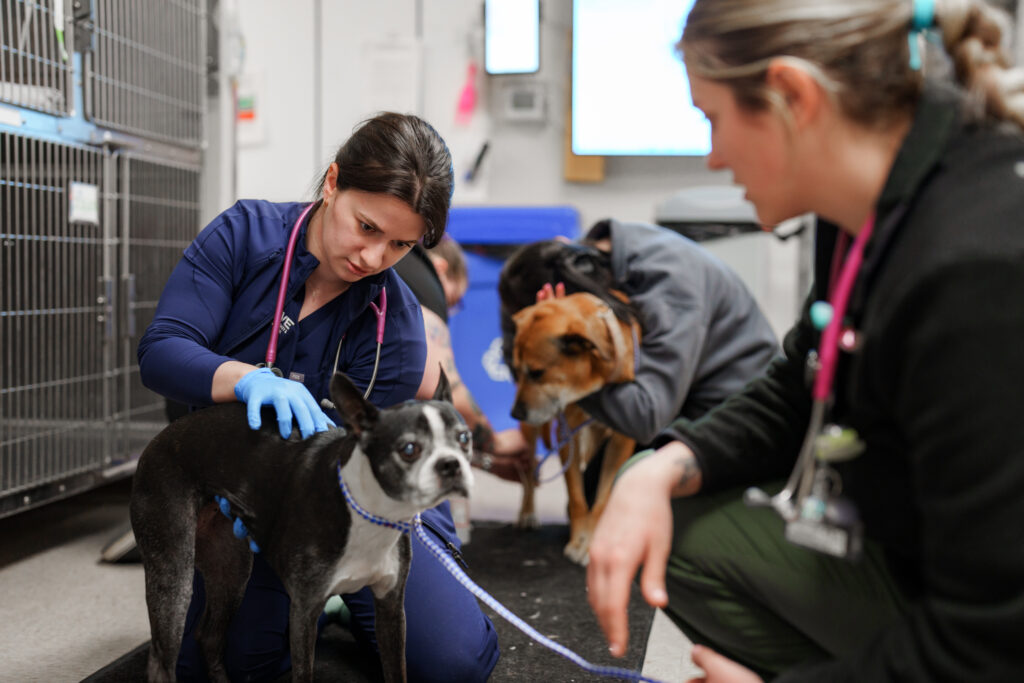
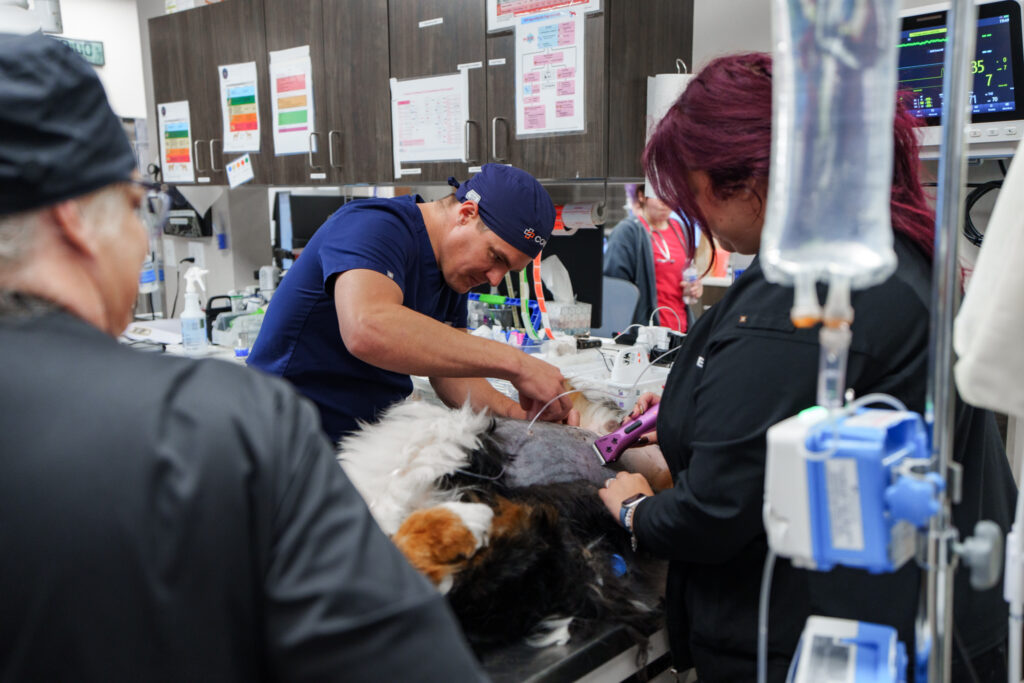
The team may place intravenous catheters and begin fluids, pain control, oxygen, and medication while monitoring the dog’s circulation and heart rhythm. Severe complications may require additional supportive care or blood products.
Decompression
Removing trapped gas can reduce pressure in the stomach. Depending on the patient’s condition, decompression may be performed using a tube passed into the stomach or a needle or catheter placed through the body wall.
Emergency Surgery
Surgery is required when the stomach has twisted. The surgeon returns the stomach to its normal position and evaluates the stomach and spleen for damage. Tissue that has lost its blood supply may need to be removed.
A gastropexy is generally performed during surgery. This procedure attaches the stomach to the abdominal wall to greatly reduce the chance that it will twist again. It does not prevent the stomach from becoming distended in the future.
COVE provides emergency surgery for pets when urgent surgical intervention is needed.
Recovery and Prognosis
After surgery, dogs typically require hospitalization for pain management, intravenous fluids, heart-rhythm monitoring, and observation for complications. The prognosis depends on how long the stomach was twisted, the severity of shock, whether tissue was damaged, and the dog’s overall health.
Early recognition and treatment are important. Delays increase the risk of stomach damage, systemic complications, and death.
Can GDV Be Prevented?
No feeding or lifestyle change can guarantee prevention. Owners of high-risk dogs should discuss preventive gastropexy with their veterinarian. It is sometimes performed during another planned abdominal procedure, such as a spay or neuter.
Your veterinarian may also recommend individualized feeding and activity practices, such as dividing food into multiple meals and slowing rapid eating. These measures do not replace gastropexy and do not eliminate the need to recognize emergency signs.
What Should I Do If I Think My Dog Has Bloat?
- Begin transporting your dog to an emergency veterinary hospital immediately.
- Call ahead if another person can do so safely, but do not delay departure.
- Keep your dog as calm as practical and limit unnecessary activity.
- Do not attempt to release gas, induce vomiting, or treat the condition at home.
For additional warning signs, review the Top 10 pet emergencies seen at the veterinary ER and when a pet should receive emergency care.
Emergency GDV Treatment at COVE Pet Care
COVE Pet Care provides emergency medicine and critical care for dogs with suspected bloat and other life-threatening conditions in Central Ohio. Our guide to emergency vet visits and triage explains what owners can expect upon arrival.