When a dog or cat suddenly becomes ill or injured, recognizing an emergency can save critical time. Some warning signs are obvious, while others—such as repeated litter-box visits or subtle breathing changes—can be easy to underestimate.
These are ten of the emergencies veterinary ER teams commonly evaluate. The list is not exhaustive, and different diseases can cause similar symptoms. If your pet is rapidly getting worse or you are unsure whether it is safe to wait, call a veterinarian or emergency hospital for guidance.
For help comparing mild, urgent, and life-threatening symptoms, read When Should I Take My Pet to the Vet?
1. Difficulty Breathing
Breathing problems are always concerning because a pet can deteriorate quickly when they are not getting enough oxygen. Warning signs include:
- Labored or unusually fast breathing at rest
- Gasping, choking sounds, or pronounced abdominal effort
- Standing with the elbows away from the body or extending the neck to breathe
- Open-mouth breathing in a cat
- Pale, gray, or blue gums
Heart disease, asthma, pneumonia, fluid around the lungs, allergic reactions, airway obstruction, trauma, and heatstroke are among the possible causes. Keep your pet calm, minimize handling, and seek emergency care immediately.
2. Severe Vomiting or Diarrhea
An isolated digestive upset may be mild, but repeated vomiting or diarrhea can cause dehydration and may signal infection, pancreatitis, toxin exposure, bleeding, or an intestinal obstruction.
Seek prompt care when vomiting or diarrhea is frequent or accompanied by blood, marked lethargy, abdominal pain, a swollen abdomen, weakness, refusal to drink, or suspected ingestion of a foreign object. Puppies, kittens, senior pets, and animals with chronic conditions may need evaluation sooner.
Do not give human antidiarrheal or nausea medication unless a veterinarian specifically recommends it for your pet.
3. Being Hit by a Car or Other Major Trauma
A vehicle accident, fall, animal attack, or crushing injury can cause internal bleeding, lung injury, fractures, head trauma, or organ damage even when no severe wound is visible. Some pets initially walk or act alert because of adrenaline and then deteriorate later.
Approach carefully because an injured pet may bite from pain or fear. Move the pet as little as practical, support the body during transport, and seek immediate veterinary evaluation. Do not assume a pet is uninjured because they can stand.
4. Toxin or Poison Ingestion
Common pet toxins include chocolate, grapes and raisins, xylitol, human medications, some veterinary medications, household chemicals, rodenticides, cannabis products, and toxic plants. The danger depends on the substance, dose, pet’s size, and time since exposure.
Call a veterinarian, emergency hospital, or animal poison-control service immediately—even if your pet has no symptoms yet. Keep the packaging or photograph the label and be ready to provide your pet’s weight, the amount involved, and the approximate time of exposure.
Do not induce vomiting or give medication, food, milk, oil, salt, charcoal, or hydrogen peroxide unless a veterinary professional or animal poison-control specialist instructs you to do so. Vomiting can be dangerous after some exposures or when a pet is already showing neurologic signs.
5. Bloat or Gastric Dilatation-Volvulus
Gastric dilatation-volvulus, or GDV, occurs when the stomach becomes distended and twists. The twisting restricts blood flow and can rapidly lead to shock and organ damage.
Warning signs include a swollen or painful abdomen, repeated attempts to vomit with little or nothing produced, excessive drooling, pacing, panting, pale gums, weakness, and collapse. Large, deep-chested dogs are at higher risk, but GDV can affect other dogs.
GDV requires immediate veterinary and surgical treatment. Do not wait for the abdomen to become visibly enlarged. Read the full guide to bloat and GDV symptoms in dogs.
6. Seizures
A seizure may involve falling, stiffening, paddling, facial twitching, drooling, altered awareness, or involuntary urination or defecation. Some pets appear confused, restless, temporarily unable to see, or very tired afterward.
During a seizure, clear nearby objects, keep other pets away, and time the episode. Do not restrain your pet or place your hands near their mouth. If it is safe, record a short video for the veterinarian.
Seek emergency care for a seizure lasting about five minutes, multiple seizures close together, difficulty recovering, suspected toxin exposure, breathing problems, or dangerously high body temperature. A first-time seizure should also prompt veterinary evaluation.
7. Straining to Urinate, Especially in Male Cats
A cat repeatedly visiting the litter box, straining, vocalizing, licking the genital area, or producing only drops of urine may have a urinary obstruction. Owners sometimes mistake urinary straining for constipation.
A complete blockage prevents urine from leaving the body and can cause dangerous electrolyte changes, kidney injury, and death. Male cats are particularly at risk because their urethra is narrow.
If your cat is producing little or no urine, seek emergency veterinary care immediately. Do not press on the abdomen or wait overnight to see whether the problem resolves.
8. Eye Injuries and Sudden Vision Changes
Eye problems can worsen quickly and may threaten vision. Emergency signs include a visible injury, severe squinting, sudden cloudiness, marked swelling, bleeding, a bulging eye, chemical exposure, unequal pupils, or sudden loss of vision.
Prevent rubbing when possible and seek prompt veterinary evaluation. Do not apply leftover eye medication: some products can worsen particular eye injuries. For chemical exposure, call a veterinarian immediately for product-specific first-aid guidance while arranging care.
9. Severe Bleeding, Bite Wounds, or Open Injuries
Heavy bleeding, deep wounds, chest or abdominal wounds, exposed bone, and bite injuries require prompt care. Bite wounds may look small at the surface while causing deeper tissue damage, infection, or internal injury.
For external bleeding, place a clean towel or cloth over the wound and apply steady direct pressure during transport. If blood soaks through, add material on top rather than removing the first layer. Avoid tight tourniquets unless a veterinary professional gives specific instructions.
10. Sudden Collapse or Extreme Weakness
Collapse, fainting, inability to stand, loss of consciousness, or sudden profound weakness may result from internal bleeding, shock, heart disease, severe anemia, low blood sugar, neurologic disease, heatstroke, or toxin exposure.
Check whether your pet is breathing, keep them as still as practical, and transport them for immediate evaluation. Pale, gray, or blue gums, a swollen abdomen, breathing difficulty, or unresponsiveness make the situation especially critical.
What Happens at the Veterinary ER?
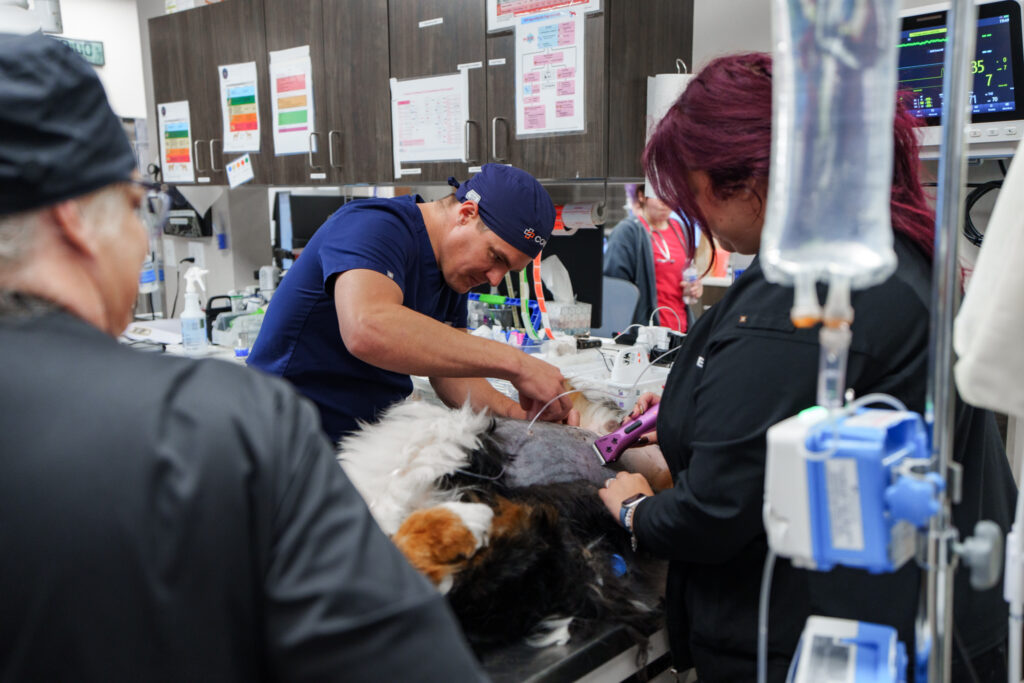
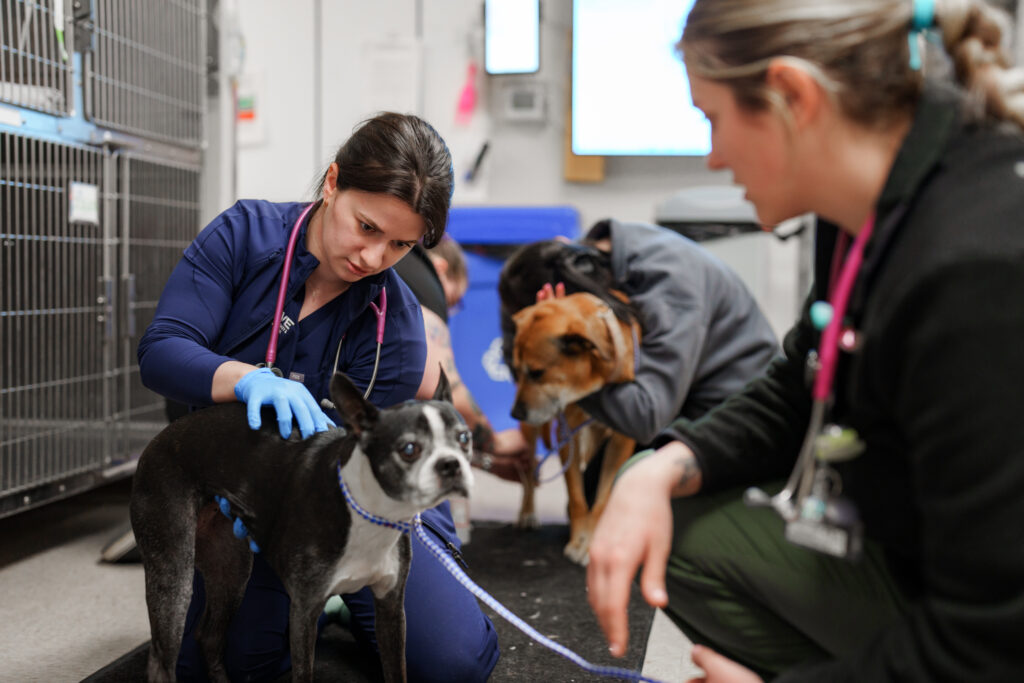
Emergency patients are prioritized according to medical urgency rather than arrival order. A critically ill pet may be stabilized immediately, while a stable pet may wait for an examination. Bloodwork, X-rays, ultrasound, oxygen support, medication, surgery, or hospitalization may be recommended depending on the problem.
Our guide to emergency vet visits, triage, and wait times explains the process in detail.
Emergency Veterinary Care at COVE Pet Care
If your pet is experiencing one of these warning signs, COVE Pet Care provides emergency medicine and critical care for dogs and cats in Central Ohio. Call ahead when possible, but do not delay safe transportation during a life-threatening emergency.