Cushing’s disease in dogs, also called hyperadrenocorticism, occurs when the body is exposed to too much cortisol for too long. It can cause increased thirst, urination, appetite, panting, muscle loss, abdominal enlargement, and skin or coat changes. Because those signs overlap with several other diseases, diagnosis requires veterinary testing rather than symptoms alone.
What causes Cushing’s disease?
Cortisol is a normal hormone produced by the adrenal glands. It helps the body respond to stress and influences metabolism, blood pressure, inflammation, and other functions. Problems develop when cortisol exposure remains excessive.
Most naturally occurring cases in dogs are pituitary-dependent. A small growth in the pituitary gland produces too much adrenocorticotropic hormone, which signals both adrenal glands to make cortisol. A smaller proportion of cases are caused by an adrenal gland tumor. Cushing-like signs can also result from long-term or high-dose corticosteroid medication; this is called iatrogenic hyperadrenocorticism.
The cause matters because it affects additional testing, treatment choices, and monitoring. Do not reduce or stop a prescribed steroid abruptly unless the veterinarian managing your dog provides a tapering plan.
Common symptoms in dogs
Signs often develop gradually and may initially look like normal aging. Common changes include:
- Drinking more water and producing more urine
- Increased appetite
- Panting more than expected
- A rounded or pendulous abdomen
- Loss of muscle strength or stamina
- Thin skin, easy bruising, slow healing, or recurrent skin infections
- Symmetrical hair thinning or failure of clipped hair to regrow
- Recurring urinary tract infections, sometimes without obvious urinary signs
No single sign is unique to Cushing’s disease. Diabetes, kidney or liver disease, medication effects, urinary infection, and other endocrine conditions can produce part of the same pattern. If the main concern is increased water intake or urine volume, see why a dog may be drinking and peeing more.
How veterinarians test for Cushing’s disease
The diagnostic process begins with the history, medication review, and physical examination. A complete blood count, chemistry profile, and urinalysis help identify patterns that may support suspicion, reveal complications, or point to another cause. A urine culture and blood pressure measurement may also be appropriate.
Endocrine screening tests can include a low-dose dexamethasone suppression test or an ACTH stimulation test. Each has strengths and limitations. Results must be interpreted in the context of the dog’s signs and overall health because stress, medication, and other illnesses can affect testing. A urine cortisol-to-creatinine ratio can sometimes help rule out Cushing’s when normal, but an elevated result does not confirm the disease by itself.
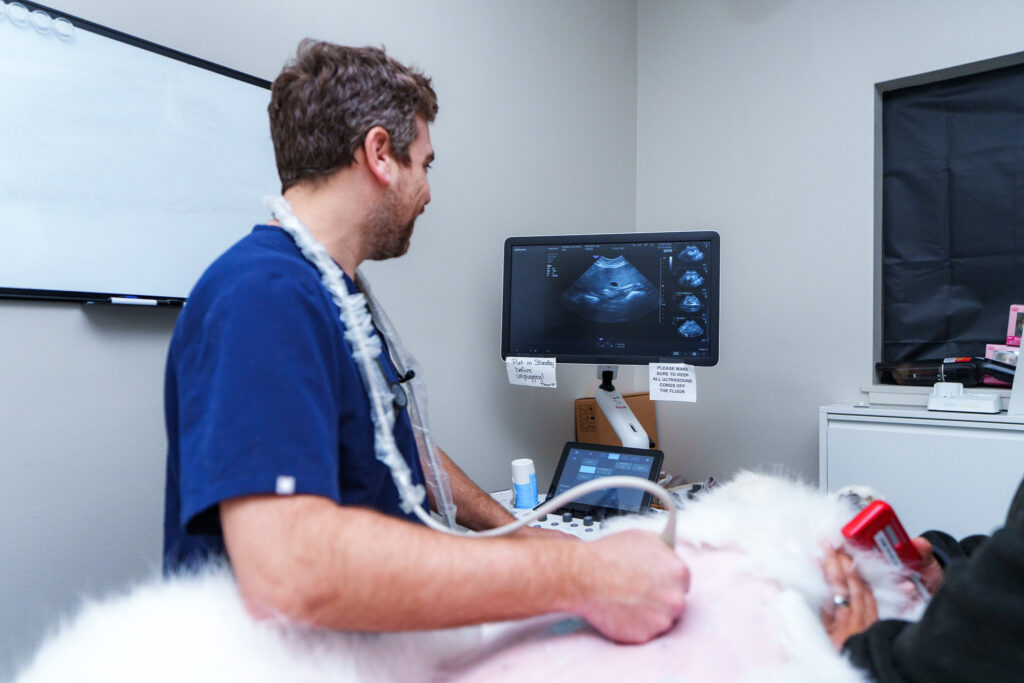
Once hyperadrenocorticism is supported, the veterinarian may use additional hormone testing and abdominal imaging to help distinguish pituitary-dependent from adrenal-dependent disease. Abdominal ultrasound can evaluate the adrenal glands and other organs, but adrenal appearance alone cannot diagnose every case.
Treatment options
Treatment is individualized according to the cause, clinical signs, other diseases, and the family’s goals. Many dogs with pituitary-dependent disease are managed medically. Trilostane is commonly used to reduce cortisol production. Mitotane is another medication that may be used in selected cases. Both require veterinary supervision because excessive suppression of adrenal function can be dangerous.
Surgery may be considered for an adrenal tumor when imaging, tumor characteristics, the dog’s overall health, and surgical expertise make it appropriate. Some pituitary tumors remain small, while larger tumors can cause neurologic signs and may lead to discussion of advanced imaging or radiation therapy. Iatrogenic disease is managed by carefully adjusting the causative steroid with the prescribing veterinarian.
Treatment is intended to control clinically important signs and reduce complications. It does not make every laboratory value normal, and medical therapy does not remove a pituitary or adrenal tumor.
Why monitoring matters
Cushing’s management is an ongoing process. Rechecks assess thirst, urination, appetite, panting, energy, skin health, body weight, and medication tolerance. Blood tests and hormone testing are scheduled according to the medication, response, and the clinician’s protocol. Dose changes should be based on the complete clinical picture, not a single number.
Contact the prescribing veterinarian promptly if a treated dog develops poor appetite, vomiting, diarrhea, marked lethargy, weakness, shaking, or collapse. These signs can reflect excessive adrenal suppression or another serious illness and may require urgent testing and treatment.
Conditions that may occur alongside Cushing’s
Dogs with Cushing’s disease may have high blood pressure, protein in the urine, urinary infection, gallbladder disease, diabetes, blood-clot risk, skin infection, or other age-related disease. These concerns influence treatment priorities and monitoring. Improvement can be gradual, and hair or muscle changes often take longer to respond than thirst and appetite.
When an Internal Medicine specialist may help
Referral may be useful when screening tests conflict with the clinical picture, another illness could be affecting the results, an adrenal mass is present, a dog has significant complications, or treatment is difficult to regulate. An internist can integrate endocrine testing, imaging, medication response, and related conditions into one plan.
Learn when a pet may need a veterinary internal medicine specialist and explore COVE’s Internal Medicine service in Central Ohio.
Frequently asked questions
Is Cushing’s disease curable?
Many pituitary-dependent cases are controlled rather than cured with medication. Some adrenal tumors can potentially be treated surgically, but candidacy and outcome depend on the tumor and the patient’s health. Iatrogenic disease may improve with a carefully supervised steroid adjustment.
Can Cushing’s be diagnosed from routine bloodwork?
No. Routine tests may show a suggestive pattern and help identify complications, but specific endocrine testing and clinical correlation are needed.
Do all dogs with a high alkaline phosphatase have Cushing’s?
No. This enzyme can increase for many reasons, including other disease and medication. Its interpretation depends on the dog’s history, signs, and additional findings.
How quickly does treatment work?
Thirst, urination, and appetite may improve before skin, coat, or muscle changes. Timing varies, and follow-up is essential to balance symptom control with medication safety.
When is the situation an emergency?
Collapse, severe weakness, repeated vomiting or diarrhea, inability to keep water down, breathing difficulty, a swollen painful abdomen, or sudden neurologic signs warrant immediate care. Use COVE’s Emergency Medicine page to find the nearest open hospital.
Talk with your veterinary team
If your dog has a pattern consistent with Cushing’s disease or is difficult to regulate after diagnosis, schedule an examination. Pet owners and referring veterinarians can contact COVE Pet Care to discuss appropriate next steps.
This article is educational and does not diagnose or provide a treatment plan for an individual dog. Hormone tests and medications must be selected, prescribed, and monitored by a veterinarian.