A meniscus tear can be an important part of a dog’s cranial cruciate ligament (CCL) injury. The CCL stabilizes the knee, while the menisci help distribute load and absorb shock between the femur and tibia. When the CCL is damaged, abnormal motion can pinch or tear meniscal tissue and add another source of pain.
Pet owners often call canine CCL disease an ACL tear. The terms refer to similar structures, but CCL is the accurate veterinary term. Meniscal injury cannot be confirmed from a sound, symptom, or video alone; diagnosis and treatment require veterinary assessment.
What Is the Meniscus?
Each canine knee contains medial and lateral menisci. These firm, cartilage-like structures sit between the femur and tibia. They help spread forces across the joint, absorb shock, contribute to stability, and provide information about joint position.
The medial meniscus is more firmly attached and less mobile than the lateral meniscus. In a CCL-deficient knee, the tibia moves abnormally during weight bearing. That motion can trap and damage the medial meniscus.
How CCL Disease Leads to Meniscal Injury
The CCL normally limits forward and rotational movement in the knee. A partial or complete tear allows instability. During weight bearing, abnormal movement can place the meniscus between shifting joint surfaces and create a tear.
Meniscal damage may be present when the CCL injury is first diagnosed. It can also appear later in an unstable knee or, less commonly, after treatment. Not every dog with CCL disease has a meniscus tear, and not every recovery setback is meniscal.
Signs That May Be Associated with a Meniscus Tear
- Back-leg limping associated with CCL disease
- A sudden worsening after a period of improvement
- Pain when the knee moves
- Reluctance to rise, use stairs, run, or jump
- A click or pop from the knee
- Persistent or recurrent lameness
- Swelling or thickening around the knee
A click may raise concern, but it is not a definitive diagnosis. Some meniscal tears do not create an audible sound, and clicking can have other causes. An examination is needed whenever function declines or pain persists.
Diagnosing Meniscal Injury
History and Orthopedic Examination
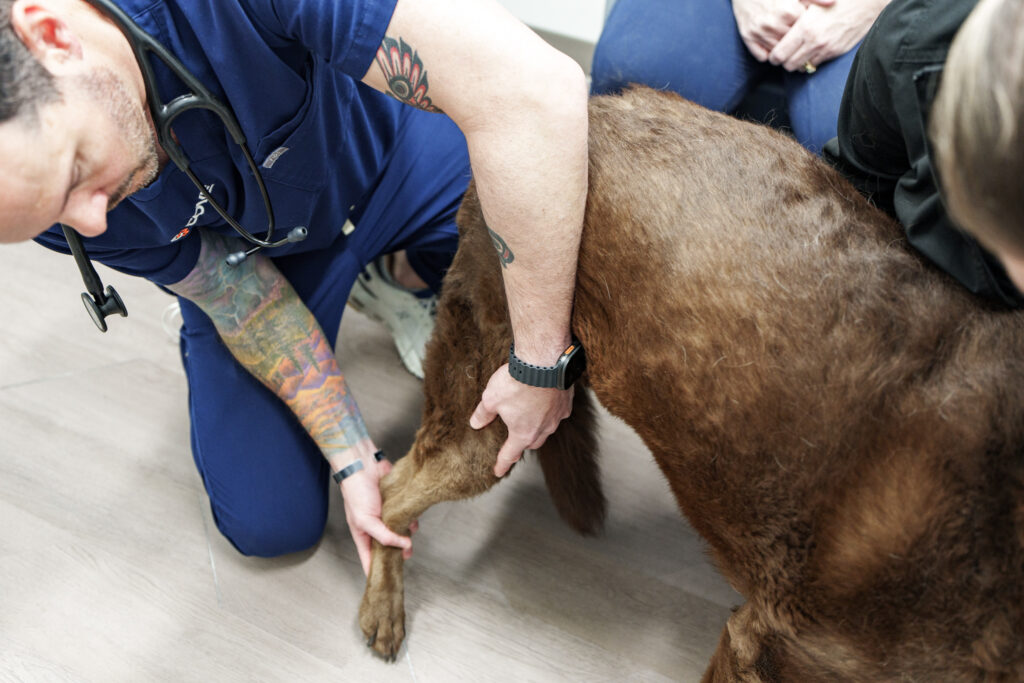
The veterinarian will ask when the limp started, whether it changed suddenly, and whether CCL disease or surgery has already been diagnosed. The examination assesses gait, joint swelling, pain, range of motion, muscle loss, patellar stability, and CCL instability.
Cranial drawer and tibial thrust help identify instability associated with a CCL tear. Sedation may be useful when muscle tension or discomfort makes the examination difficult.
Radiographs
Meniscal tissue is not shown directly on routine radiographs, but radiographs help evaluate joint swelling, arthritis, bone, alignment, implants, and other possible causes of lameness. They are also used for planning procedures such as TPLO and for checking healing after surgery.
Direct Joint Evaluation
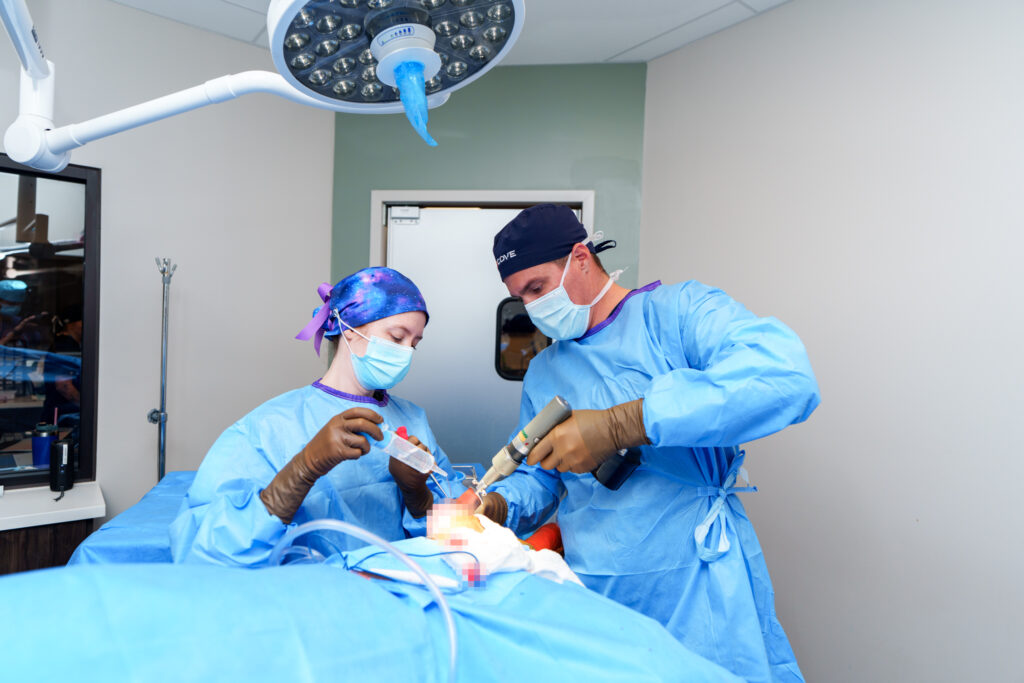
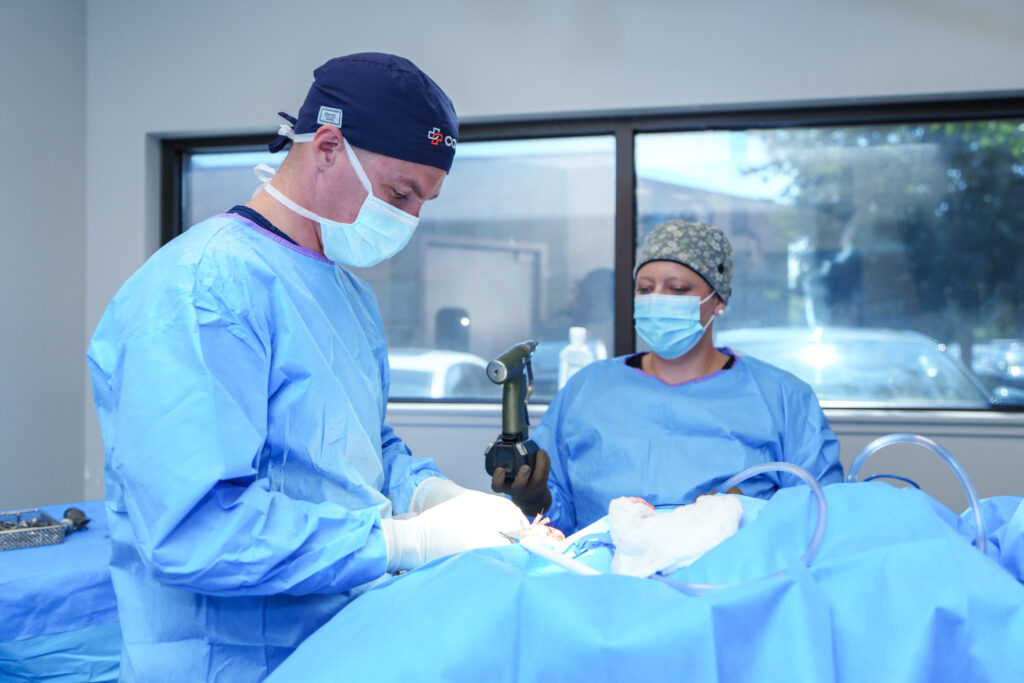
The menisci may be inspected during surgery through an arthrotomy or arthroscopy, depending on the case and surgical approach. The surgeon probes the tissue to identify unstable or damaged portions that may not be obvious from the surface.
No single external sign reliably rules a meniscal tear in or out. The surgeon combines the history, examination, imaging, and joint findings.
Treating a Meniscus Tear
When a damaged meniscal portion is unstable and painful, the surgeon may remove the affected segment while preserving healthy tissue when possible. The exact treatment depends on the tear pattern, location, tissue quality, and condition of the joint.
Treating the meniscus does not by itself correct CCL instability. If the knee is CCL-deficient, the treatment plan also needs to address instability through an appropriate surgical or nonsurgical strategy.
Meniscal Evaluation During TPLO
TPLO changes knee mechanics by rotating the tibial plateau and stabilizing the osteotomy with a plate and screws. During the same operation, the surgeon evaluates the joint and treats meniscal damage when indicated.
Learn more about the full TPLO procedure, candidacy, and recovery. TPLO may be appropriate for many dogs with CCL disease, but an individual recommendation depends on the patient’s anatomy, health, activity, instability, arthritis, and other findings.
Can a Meniscus Tear Occur After CCL Surgery?
A later meniscal injury is possible after CCL surgery, although many other problems can cause postoperative lameness. A dog that suddenly becomes more lame after improving should be rested and the surgical team contacted. The team may recommend an examination and radiographs or other evaluation.
Do not assume a setback is normal soreness, and do not increase medication or start an old prescription without veterinary direction.
Meniscal Injury, Arthritis, and Long-Term Mobility
CCL disease and meniscal damage contribute to joint inflammation and osteoarthritis. Treating instability and damaged tissue can improve comfort and function, but it cannot erase existing arthritis or guarantee that arthritis will not progress.
Long-term joint care may include maintaining a healthy body condition, appropriate regular exercise, rehabilitation, and a veterinarian-directed arthritis plan. Sudden or recurring changes should be examined rather than attributed automatically to aging.
When to Request an Examination
Arrange veterinary guidance if a dog has a new back-leg limp, a limp that keeps returning, a sudden decline after improvement, or pain associated with a known CCL injury. Seek more urgent care if the dog cannot stand, has severe pain, has an obvious deformity, or became lame after significant trauma.
The broader guide to common causes and warning signs of dog limping can help owners choose the appropriate level of care.
Questions to Ask the Orthopedic Team
- Is CCL instability present?
- What findings raise concern for meniscal injury?
- How will the meniscus be evaluated?
- How would damaged tissue be treated?
- Which procedure is recommended for the CCL injury, and why?
- What changes during recovery could suggest a setback?
- How will arthritis be managed over time?
Meniscal and CCL Evaluations at COVE
COVE Pet Care evaluates canine knee injuries for families in Columbus, Clintonville, Delaware, and throughout Central Ohio. The orthopedic team reviews the history and available imaging, examines the knee, explains treatment options, and creates a patient-specific plan.
Explore orthopedic surgery at COVE or request a consultation. Online information cannot confirm a meniscus tear or determine whether a dog needs TPLO.