A cranial cruciate ligament injury can turn ordinary movement into a struggle. A dog may suddenly hold up a back leg, develop a limp that comes and goes, or become reluctant to rise, use stairs, jump, or play. These injuries are often called ACL tears by pet owners, but in dogs the ligament is correctly called the cranial cruciate ligament, or CCL.
Tibial plateau leveling osteotomy (TPLO) is one surgical option used to stabilize a CCL-deficient knee. It can be an appropriate choice for many dogs, but it is not the right procedure for every patient. An orthopedic evaluation is needed to confirm the diagnosis, assess the knee and the rest of the dog’s health, and compare treatment options. This guide explains the procedure, planning, recovery, and questions to discuss with your veterinary surgical team.
What Does the Cranial Cruciate Ligament Do?
The CCL is one of the major stabilizing structures inside the canine knee, which veterinarians call the stifle. It helps prevent abnormal forward movement and rotation of the tibia in relation to the femur. When the ligament is damaged, the knee can become painful and unstable during weight bearing.
People often use the term ACL because the human anterior cruciate ligament has a similar role. In veterinary medicine, CCL or CrCL is the more accurate term. A reference to a dog ACL tear usually means a canine CCL injury.
Why CCL Disease Often Develops Gradually
Some dogs injure a healthy ligament during a major traumatic event, but many canine CCL injuries develop through progressive ligament degeneration. Age, genetics, body condition, activity, joint anatomy, and other factors may all contribute. A dog can appear to hurt the knee during a run or jump even though the ligament had been weakening over time.
This gradual process helps explain why symptoms may improve with rest and later return. It also explains why some dogs eventually develop CCL disease in the other knee. An injury in one knee does not make a future injury in the opposite knee certain, but owners should watch both back legs for new limping, stiffness, or difficulty rising.
Partial and Complete CCL Tears
A partial tear means some ligament fibers remain intact. Signs may be subtle or intermittent, and knee instability can be harder to detect during an awake examination. Partial tears can progress, although the timing and degree of progression vary among dogs.
A complete tear usually creates more obvious instability and lameness. The amount of discomfort does not always indicate whether a tear is partial or complete, so an examination is important even when a dog occasionally seems better.
Signs of a CCL Injury
Common signs include:
- Sudden or recurring limping in a back leg
- Toe-touching or holding the affected leg up
- Difficulty rising, climbing stairs, jumping, or getting into a car
- Reluctance to run or play
- Sitting with one leg positioned away from the body
- Stiffness after rest
- Swelling or thickening around the knee
These signs can also occur with fractures, patellar luxation, arthritis, muscle injuries, and other orthopedic problems. The guide to common causes of limping in dogs can help owners recognize warning signs, but it cannot identify the cause without an examination.
How Veterinarians Diagnose a CCL Tear
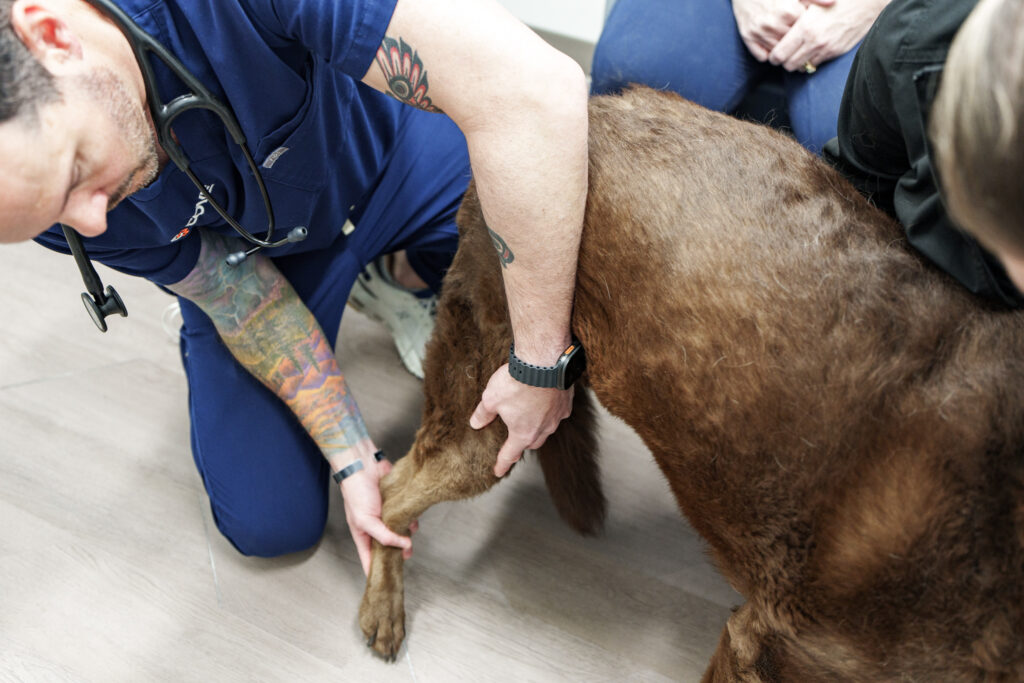
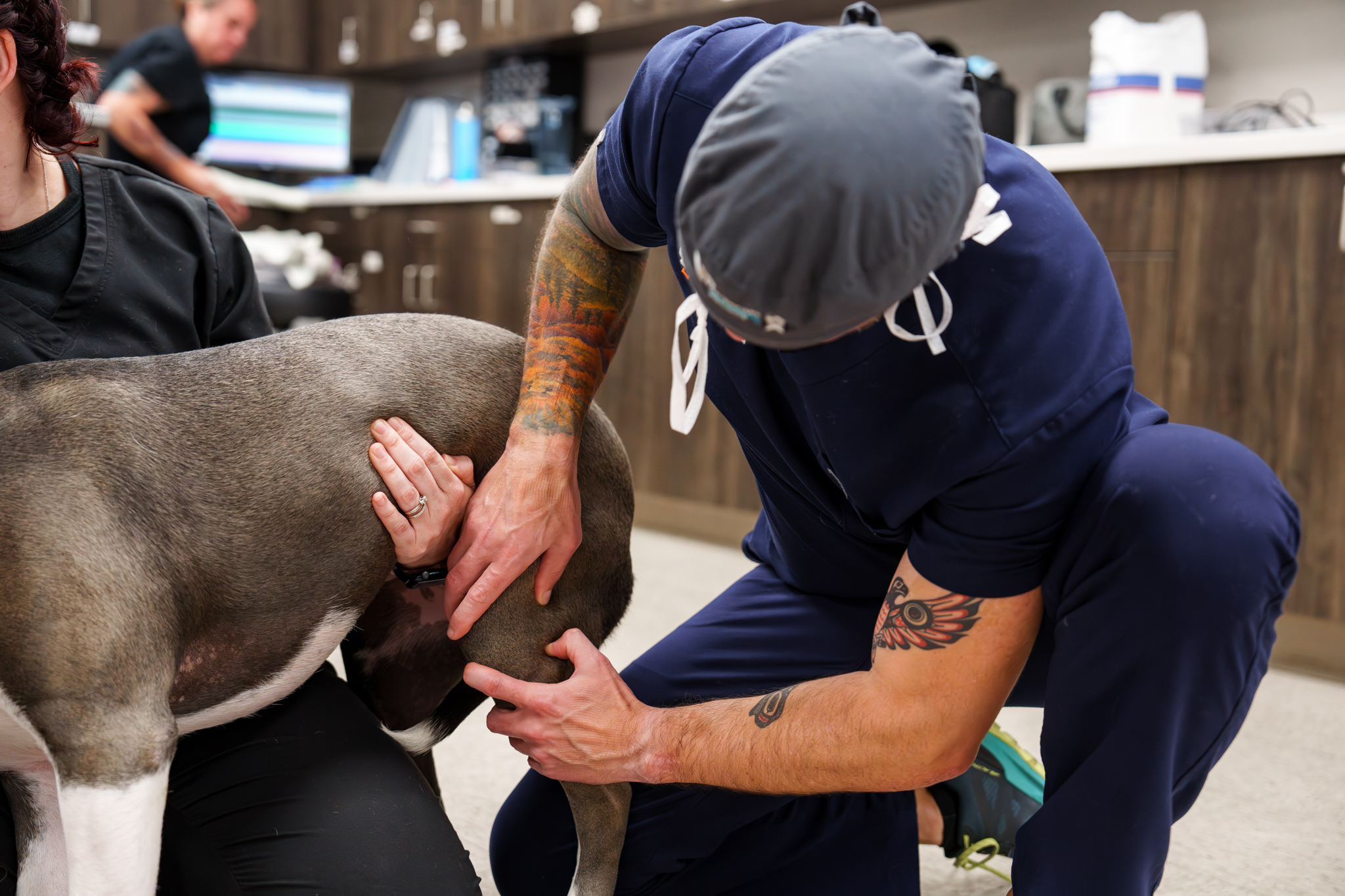
Diagnosis begins with a history, gait assessment, and orthopedic examination. The veterinarian will evaluate the affected knee and compare it with the other leg. Muscle loss, joint swelling, pain, range of motion, kneecap stability, and other findings can help narrow the cause of lameness.
Cranial Drawer and Tibial Thrust
Cranial drawer and tibial thrust are examination findings associated with CCL instability. Cranial drawer is abnormal forward movement of the tibia relative to the femur. Tibial thrust is the tendency of the tibia to move forward when forces are applied through the limb. These findings may be clear with a complete tear and more subtle with a partial or chronic injury. Sedation is sometimes needed so tense muscles do not mask instability.
Radiographs and Surgical Planning
Radiographs do not show the ligament itself as clearly as they show bone, but they can reveal joint swelling, arthritis, fractures, bone changes, and other conditions. If TPLO is being considered, properly positioned radiographs are also used to measure the tibial plateau and plan the bone rotation and implant placement. Additional tests may be recommended when the examination or images suggest another problem.
Meniscal Injury
The menisci are cartilage structures inside the knee that help distribute load and absorb shock. An unstable CCL-deficient knee can damage a meniscus, especially the medial meniscus. A meniscal tear can add pain, clicking, or persistent lameness. The surgeon evaluates the meniscus and treats damaged tissue when indicated.
How TPLO Changes Knee Mechanics
TPLO does not replace the torn ligament. Instead, the surgeon makes a curved cut in the upper tibia, rotates the tibial plateau to a planned angle, and secures the bone with a plate and screws. This changes the forces acting through the knee during weight bearing and reduces the abnormal forward movement associated with CCL deficiency.
The plate and screws hold the rotated bone segment in position while the osteotomy heals. The implants usually remain in place after healing unless irritation, infection, or another implant-related concern makes removal appropriate.
Who May Be a TPLO Candidate?
TPLO may be considered for dogs with confirmed or strongly suspected CCL disease and clinically meaningful knee instability. Size and activity level are part of the decision, but they are not the only factors. The orthopedic team also considers age, overall health, anatomy, arthritis, whether the tear is partial or complete, the condition of the other limbs, and the owner’s goals and ability to manage recovery.
Small dogs, older dogs, and dogs with other medical conditions are not automatically excluded. Likewise, a large or active dog is not automatically a TPLO candidate. Online information cannot determine candidacy. The decision should follow an orthopedic examination and a discussion of the expected benefits, limitations, alternatives, and recovery responsibilities for that patient.
Alternatives to TPLO
Other surgical approaches include tibial tuberosity advancement (TTA) and extracapsular or lateral suture stabilization. Each procedure uses a different method to address knee instability. The most appropriate option depends on the dog’s anatomy, size, age, activity, health, degree of instability, concurrent joint disease, and the surgeon’s assessment and experience.
Nonsurgical management may be considered in selected cases and can include activity modification, weight management, rehabilitation, and veterinarian-prescribed pain control. It does not directly restore a damaged ligament, and persistent instability may continue to affect comfort and arthritis. Owners should not give human pain relievers or change medications without veterinary direction.
What Happens Before and on Surgery Day?
Consultation and Planning
The process typically includes review of symptoms and prior records, an orthopedic examination, and diagnostic imaging. Bloodwork or other testing may be recommended to evaluate anesthesia and surgical risk. The team will explain the working diagnosis, treatment options, estimate, anticipated hospital care, and home-recovery plan.
The Procedure
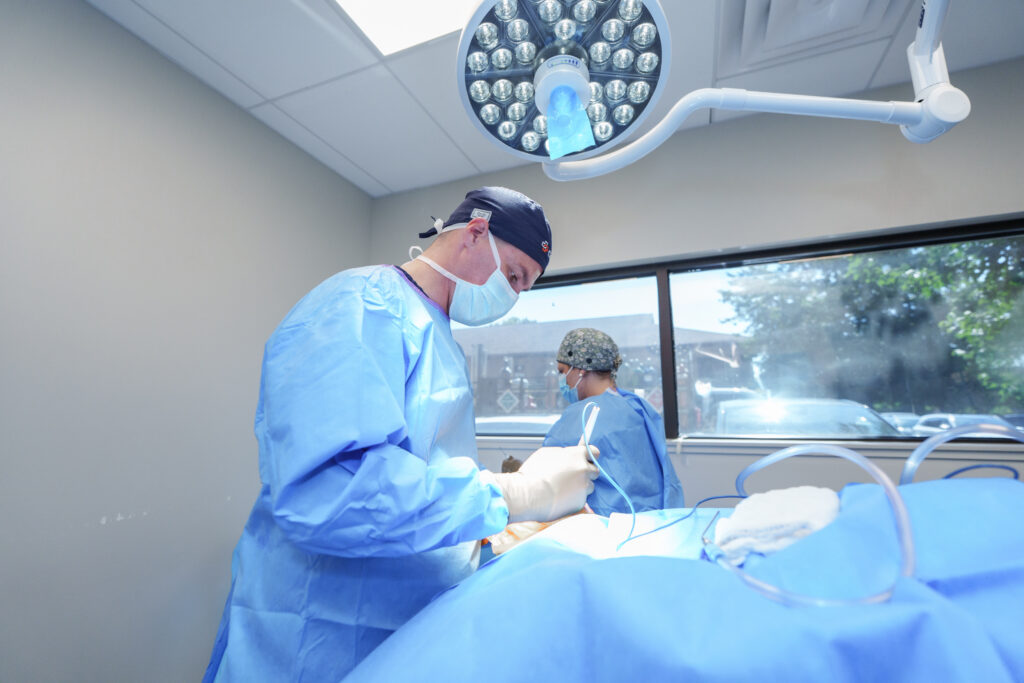
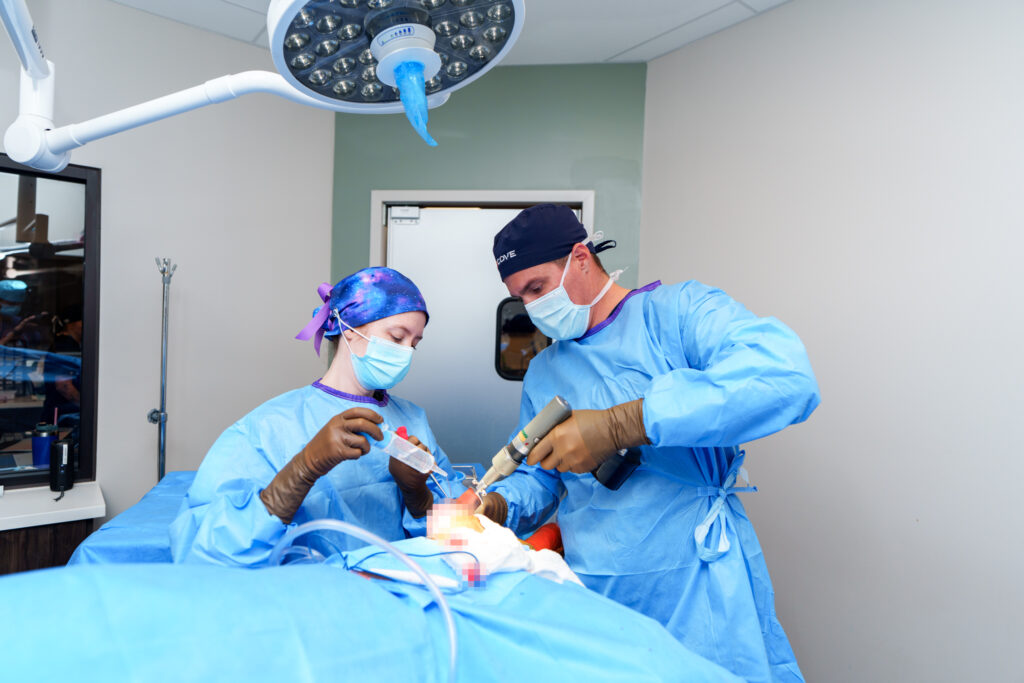
On surgery day, the patient receives anesthesia and monitoring appropriate to the planned procedure and individual health needs. The surgeon assesses the joint, addresses meniscal damage when present, performs the planned tibial osteotomy, rotates the plateau, and secures it with a plate and screws. Postoperative radiographs may be taken to evaluate alignment and implants.
Discharge
Discharge instructions usually cover prescribed medications, incision care, confinement, leash-assisted bathroom breaks, activity restrictions, warning signs, and recheck timing. The dog’s own discharge instructions always take priority over a general online timeline.
General TPLO Recovery Milestones
Early recovery focuses on comfort, incision protection, and preventing sudden activity. Some dogs begin using the leg soon after surgery, while others take longer. Weight bearing alone does not mean the bone has healed or that normal activity is safe.
The first recheck often evaluates the incision and early progress. Later rechecks and radiographs help the surgeon assess bone healing before expanding activity. Controlled leash walking and rehabilitation may be introduced or advanced according to the surgeon’s plan. Running, jumping, stairs, rough play, and off-leash activity are usually restricted until the surgical team confirms that healing is sufficient.
Activity Restriction and Rehabilitation
Activity restriction protects the osteotomy and implants during bone healing. Safe flooring, gates, a properly sized recovery area, and a leash for all outdoor trips can reduce slips and setbacks. Rehabilitation may support muscle strength, joint motion, balance, and a gradual return to function, but exercises should be chosen for the individual dog and stage of healing.
Possible Risks and Complications
TPLO is a major orthopedic procedure and complications are possible. These can include incision problems, infection, delayed bone healing, implant irritation or failure, fracture, meniscal injury, persistent lameness, and complications related to anesthesia or medications. Excessive activity before healing can increase the risk of a setback.
Contact the surgical team if the incision opens, develops increasing redness, swelling, discharge, or odor; if the dog suddenly stops using the leg after improving; if pain seems poorly controlled; or if vomiting, diarrhea, severe lethargy, breathing changes, or another concerning change occurs. Emergency symptoms should be evaluated promptly.
Arthritis and Long-Term Mobility
CCL disease begins an arthritic process in the knee, and arthritis can continue to progress after any treatment. Stabilizing the knee is intended to improve function and address instability, but it does not erase existing joint changes. Long-term care may include healthy weight management, appropriate exercise, rehabilitation, and an individualized arthritis plan.
Many dogs improve meaningfully after surgical treatment, but recovery and long-term function vary. No procedure can guarantee a specific outcome or prevent every future joint problem.
Questions to Ask During a TPLO Consultation
- What findings support a CCL injury, and is the tear partial or complete?
- Is there evidence of meniscal damage or another knee condition?
- Why is TPLO being considered for this dog?
- What alternatives are reasonable, and what are their tradeoffs?
- What does the estimate include?
- How should the home be prepared before surgery?
- What activity restrictions and rechecks should be expected?
- Which changes during recovery warrant a call or emergency visit?
- How will arthritis and the opposite knee be monitored over time?
Orthopedic Care at COVE Pet Care
COVE Pet Care evaluates canine knee injuries and other orthopedic conditions for families in Central Ohio, including Columbus, Clintonville, and Delaware. The process begins by understanding the limp, examining the patient, reviewing available records and imaging, and explaining which options may fit the individual pet.
Learn more about orthopedic surgery and TPLO consultations at COVE. To ask about an evaluation, contact COVE Pet Care. If a dog cannot bear weight after trauma, has an obvious deformity, is in severe distress, or has other urgent symptoms, seek prompt veterinary or emergency care.