A cat that repeatedly strains in the litter box but produces little or no urine may have a urethral obstruction. This is especially dangerous in male cats and is a true veterinary emergency.
When urine cannot leave the body, kidney function and the balance of fluids and electrolytes are disrupted. A blocked cat can deteriorate rapidly. If you are unsure whether your cat is urinating, seek veterinary care immediately rather than waiting for the next litter-box visit.
Signs a Cat May Have a Urinary Blockage
Warning signs include:
- Repeated trips to the litter box
- Straining to urinate with little or no urine produced
- Passing only a few drops of urine
- Crying or vocalizing in the litter box
- Urinating outside the litter box
- Blood in the urine
- Frequent licking of the genital area
- Restlessness, hiding, or obvious discomfort
- A firm or painful abdomen
- Vomiting, loss of appetite, weakness, or collapse as the condition worsens
A partially blocked cat may still pass drops of urine. Producing a small amount does not rule out an obstruction.
Why Are Male Cats at Greater Risk?
The male cat’s urethra is longer and narrower than a female cat’s. Inflammation, mucus, cells, mineral material, or a small stone can become lodged and stop urine flow more easily.
Neutered and intact males can both become obstructed. Female cats can also have serious urinary disease, but complete urethral obstruction is more common in males.
Could My Cat Be Constipated Instead?
Urinary straining is frequently mistaken for constipation because both problems can involve repeated litter-box visits and abdominal effort. Watch for actual urine clumps rather than assuming your cat is trying to pass stool.
If you cannot confidently confirm normal urination, treat the situation as a possible urinary emergency. A veterinarian can distinguish obstruction from constipation and other causes of straining.
What Causes Urinary Blockage in Cats?
A blockage may involve one or more of the following:
- A urethral plug made of mucus-like protein, cells, and mineral material
- Bladder or urethral stones
- Severe inflammation and swelling
- Urethral spasm
- Scar tissue or an anatomic narrowing
- Less commonly, a mass or other structural problem
Many cats with lower urinary tract signs have feline idiopathic cystitis, an inflammatory condition without a single identifiable cause. Not every cat with cystitis becomes blocked, but the symptoms can look similar at home.
Why Is a Urinary Blockage Life-Threatening?
A complete obstruction prevents urine from leaving the bladder. The kidneys can no longer remove waste normally or maintain a safe fluid, acid-base, and electrolyte balance.
Potassium may rise to a dangerous level and affect the heart. The bladder becomes increasingly painful and distended, kidney injury can develop, and a severely affected cat may become weak, vomit, collapse, or lose consciousness.
The condition will not resolve safely through observation, extra water, or home medication. The obstruction must be relieved by a veterinary team.
What Should I Do If My Cat Cannot Pee?
- Place your cat in a secure carrier.
- Go to an emergency veterinary hospital immediately.
- Call ahead if another person can do so without delaying departure.
- Tell the team when you last saw a normal amount of urine.
- Bring a list of medications, previous urinary problems, and any prescribed diet.
Do not press or squeeze the abdomen, attempt to express the bladder, give human medication, or wait overnight. A painful cat may bite or scratch, so handle calmly and minimally.
How Veterinarians Diagnose a Urinary Obstruction
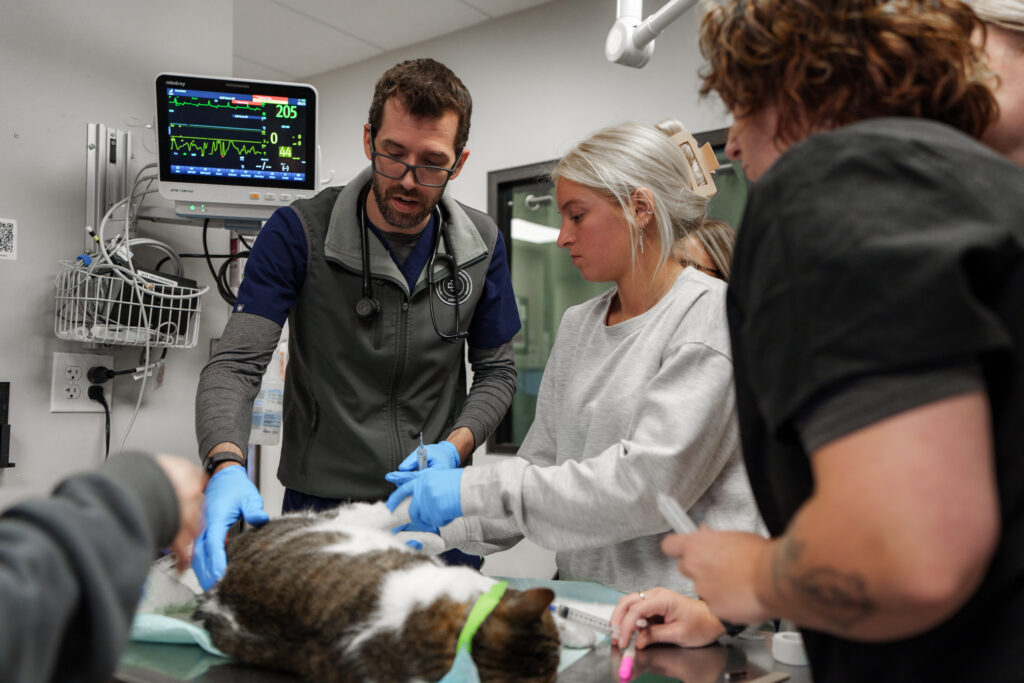
The veterinarian will examine the cat and assess the bladder, pain level, hydration, circulation, and heart rate. Diagnostic testing may include:
- Bloodwork to evaluate potassium, kidney values, hydration, and other abnormalities
- Urinalysis
- Urine culture when infection is suspected
- X-rays or ultrasound to look for stones and other urinary-tract problems
- Electrocardiogram monitoring when electrolyte changes may be affecting the heart
A critically ill cat may need stabilization at the same time diagnostic testing is performed.
How Is a Blocked Cat Treated?
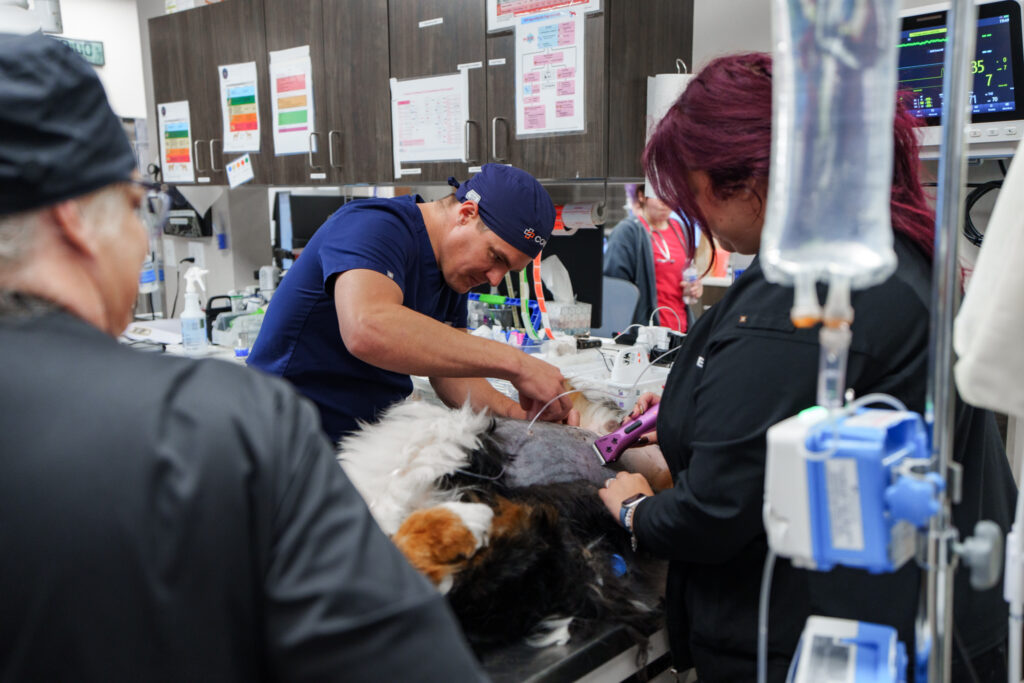
Treatment commonly involves sedation or anesthesia so a urinary catheter can be passed through the urethra and the blockage relieved. The bladder and urethra may be flushed, and the catheter may remain temporarily while swelling and inflammation improve.
Additional treatment may include:
- Intravenous fluids
- Pain medication
- Medication to address urethral spasm or other specific problems
- Correction of dangerous electrolyte abnormalities
- Monitoring urine production, kidney values, and heart rhythm
- Hospitalization until the cat can urinate safely without the catheter
Surgery may be recommended for certain stones, repeated obstruction, or structural disease. The treatment plan depends on the cause and the cat’s response.
What Happens After the Blockage Is Relieved?
Some cats temporarily produce a large amount of urine after an obstruction is relieved and need close fluid and electrolyte monitoring. Before discharge, the veterinary team will provide instructions for medication, litter-box observation, diet, water intake, activity, and follow-up testing.
Contact a veterinarian immediately if straining, frequent litter-box visits, vocalization, vomiting, hiding, or reduced urine returns. A cat can become obstructed again.
Can Urinary Blockage Be Prevented?
Prevention depends on the underlying cause. Your veterinarian may recommend a prescription diet, increased water intake, weight management, environmental enrichment, stress reduction, additional litter boxes, medication, or monitoring for stones and crystals.
Do not start a urinary diet or supplement based only on symptoms. Different types of stones and urinary disease require different approaches, and a diet appropriate for one problem may not be right for another.
Emergency Care for a Cat That Cannot Urinate
Repeated straining with little or no urine is an emergency, particularly in a male cat. Review the Top 10 pet emergencies, when a pet should see a veterinarian, and what to expect during an emergency vet visit.
COVE Pet Care provides emergency medicine and critical care for cats with urinary obstruction and other life-threatening conditions in Central Ohio.