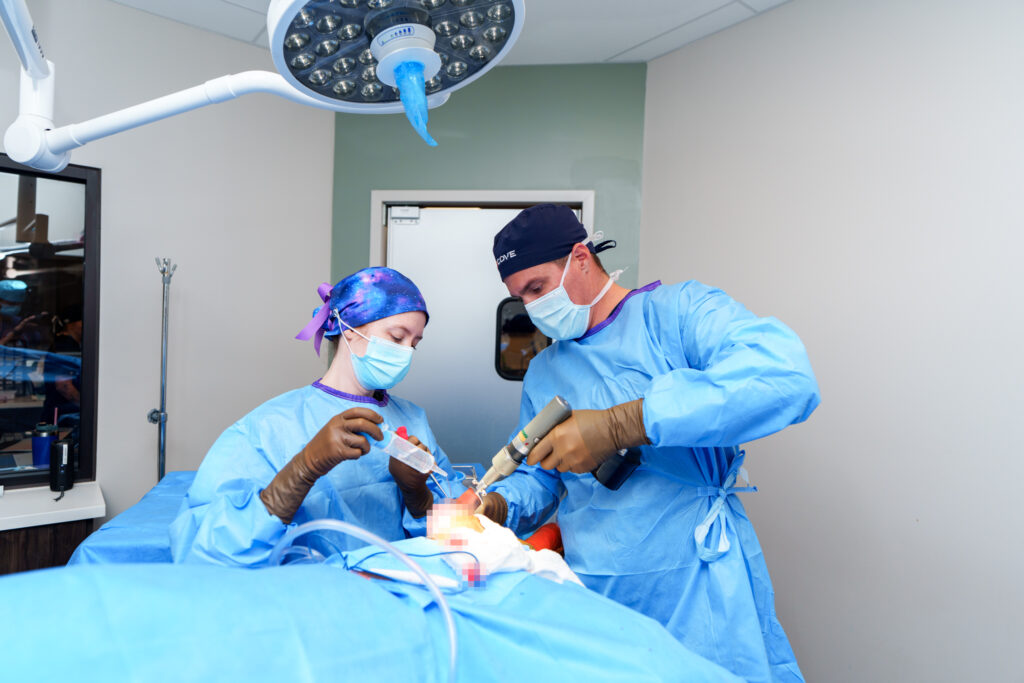
After one canine cranial cruciate ligament (CCL) injury, many owners worry that the other knee will be next. The concern is understandable because canine CCL disease often develops through progressive ligament degeneration rather than a single accident. Some dogs later develop CCL disease in the opposite knee, but it is not certain for every dog and an individual timeline cannot be predicted online.
Pet owners commonly use the term ACL tear. In dogs, the ligament is called the CCL or CrCL. Watching the opposite leg and maintaining overall joint health can help owners notice a new problem early, but no home strategy can guarantee prevention.
Why the Other Knee May Be at Risk
The CCL stabilizes the canine knee by limiting abnormal forward and rotational movement. In many dogs, the ligament weakens over time because of a combination of biological and mechanical factors. Genetics, body condition, joint shape, activity, age, and other influences may contribute.
If both ligaments share some of the same underlying risk factors, disease can eventually appear in the opposite knee. That does not mean the first injury directly causes the second one. Temporary weight shifting during recovery may add stress to other limbs, but the broader degenerative process is an important part of the discussion.
A Future Tear Is Possible, Not Inevitable
Population statistics cannot tell an owner exactly what will happen to one dog. Breed, age, anatomy, body condition, activity, and health vary widely. Some dogs never develop a clinically important problem in the other knee; others show signs months or years later.
Ask the orthopedic team how the opposite knee felt during the examination and whether swelling, instability, arthritis, patellar luxation, or another concern was present. A normal examination is reassuring for that moment, but it cannot guarantee the ligament will remain healthy indefinitely.
Warning Signs in the Other Back Leg
- A new or recurring limp
- Toe-touching or holding the leg up
- Difficulty rising, climbing stairs, or jumping
- Stiffness after rest
- Reluctance to run or play
- Sitting with one hind leg positioned away from the body
- Swelling or thickening around the knee
- A limp that improves and then returns
After surgery, it can be difficult to know which leg is causing a gait change. Contact the surgical team rather than assuming the operated leg has failed or the other CCL has torn. Hip, back, paw, muscle, patellar, and arthritic problems can also cause back-leg lameness.
When to Request Another Examination
Arrange an examination if a new limp persists, recurs, or affects normal activities. Prompt assessment is especially important when the dog stops bearing weight, seems painful, or declines after doing well. A major fall or trauma also deserves veterinary guidance.
Seek emergency care for an obvious deformity, severe distress, inability to stand, uncontrolled bleeding, breathing difficulty, collapse, or another urgent whole-body change. The guide to dog limping warning signs can help owners distinguish a routine orthopedic concern from an emergency.
How the Opposite Knee Is Evaluated
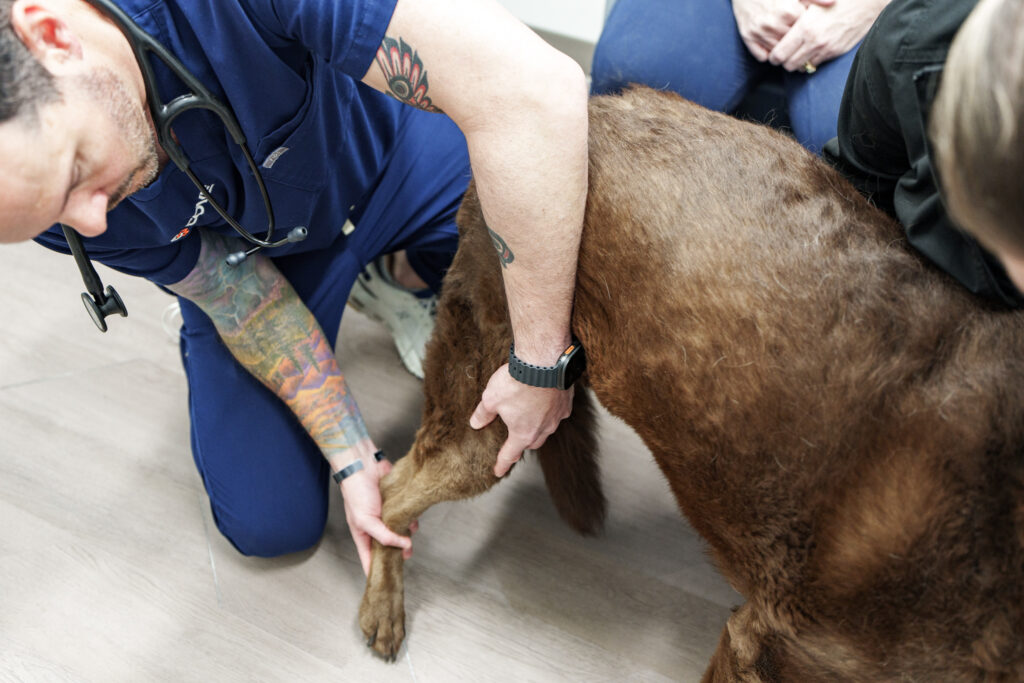
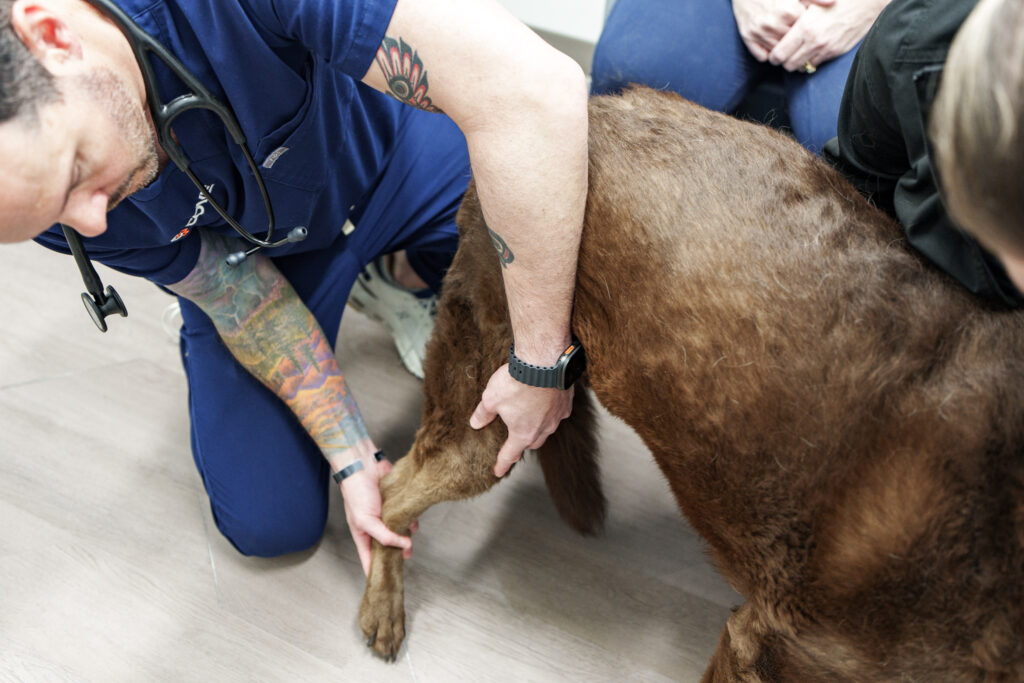
The veterinarian will observe gait and compare both back legs. The examination may assess joint swelling, pain, range of motion, muscle mass, patellar stability, cranial drawer, and tibial thrust. Sedation can help when muscle tension makes subtle instability difficult to detect.
Radiographs may show arthritis, joint swelling, bone changes, or another cause of lameness. They do not display the CCL as clearly as they display bone. Additional testing is considered when findings are unclear or another condition is suspected.
Weight Management
Maintaining a healthy body condition reduces unnecessary load on both knees and the rest of the musculoskeletal system. During activity restriction, energy needs may decrease, so ask the veterinary team whether food portions should change.
Avoid crash diets or unbalanced substitutions. A gradual, veterinarian-guided plan can account for age, medications, medical conditions, and nutritional needs. Treats used for medication or training should be included in the daily total.
Conditioning and Safe Activity
Consistent, appropriate exercise supports muscle strength, balance, and joint motion. Sudden bursts of intense activity after a sedentary period can be harder on joints than a gradual conditioning plan. However, there is no exercise program proven to eliminate opposite-knee risk.
After TPLO, follow the surgeon’s restrictions until bone healing is confirmed. Then rebuild duration, terrain, speed, and complexity in stages. Rehabilitation professionals can help tailor conditioning for dogs with arthritis, weakness, poor balance, or athletic goals.
Arthritis Management
CCL disease contributes to osteoarthritis in the affected knee, and arthritis elsewhere can influence how a dog loads each limb. A long-term plan may include healthy weight management, regular controlled exercise, rehabilitation, environmental changes, and veterinarian-prescribed treatment.
Do not give human pain relievers, another pet’s medication, or an old prescription without veterinary direction. Masking pain without examining a new limp can delay diagnosis.
Can Supplements or Braces Prevent a Tear?
Supplements, braces, and injectable therapies are sometimes marketed as ways to protect ligaments. Evidence and suitability vary, and none should be presented as a guarantee against CCL disease. Ask the veterinarian what benefit is realistically expected, what risks or costs are involved, and whether the product fits the dog’s other health needs.
A brace may also cause skin irritation or be poorly tolerated. It should not replace an examination when the knee is painful or unstable.
What If the Other CCL Tears?
The second knee should be evaluated as a new problem. Previous experience can help the owner prepare, but the diagnosis, anatomy, arthritis, meniscus, health, and treatment recommendation may differ from the first knee.
Surgical options may include TPLO, TTA, or extracapsular stabilization. Nonsurgical care may be considered in selected cases. No procedure is automatically appropriate because it was used on the other leg. Read the comprehensive TPLO and CCL surgery guide for background.
Questions for the Orthopedic Team
- Did the opposite knee show any swelling or instability?
- What changes should I watch for at home?
- How should activity progress after the current knee heals?
- What body-condition goal is appropriate?
- Would rehabilitation or a conditioning plan help?
- When should a new limp be examined?
- How can I tell a recovery setback from a problem in the other leg?
Monitoring Both Knees with COVE
COVE Pet Care evaluates CCL injuries and other orthopedic causes of lameness for families in Columbus, Clintonville, Delaware, and across Central Ohio. A consultation can assess both knees, review available imaging, and explain reasonable next steps.
Explore orthopedic care at COVE or contact the team about an evaluation. Online information cannot predict whether or when an individual dog will develop CCL disease in the other knee.