
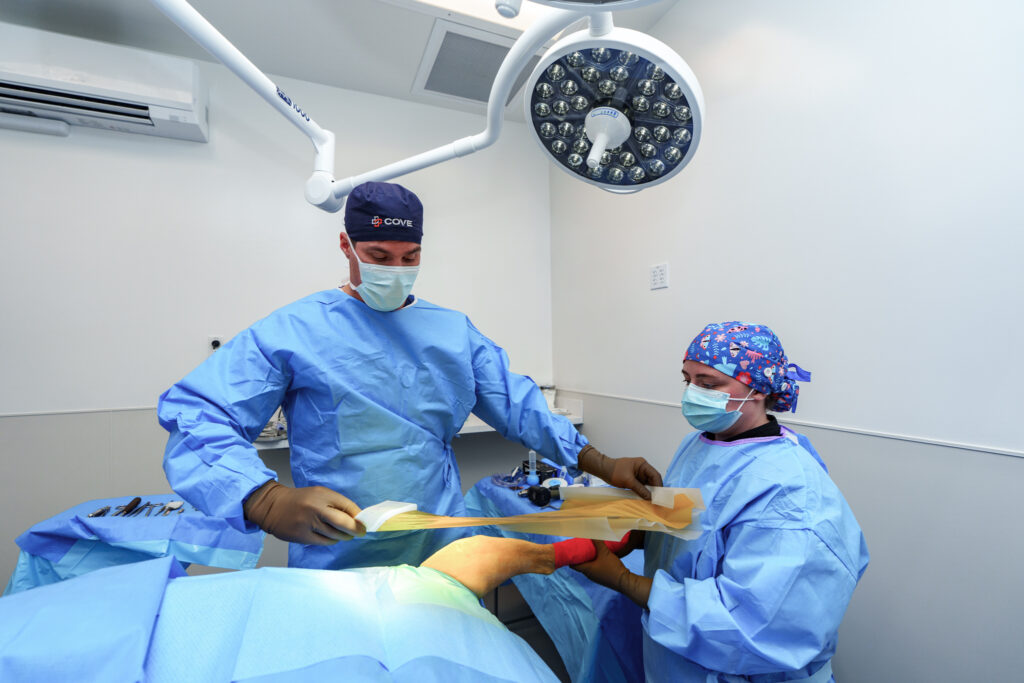
Veterinary surgery includes many procedures, from planned operations to urgent treatment after trauma or sudden illness. The right surgical path depends on the diagnosis, the patient’s overall health, how quickly treatment is needed, and whether a general practitioner or a surgical team with advanced equipment and training is most appropriate.
This overview explains the major types of veterinary surgery and how pet owners can prepare for a surgical consultation. For information about a specific condition, use the linked service and condition guides rather than relying on a broad surgery overview.
Planned and Emergency Veterinary Surgery
Planned surgery allows time for consultation, diagnostic testing, anesthesia planning, and home preparation. Examples may include treatment of a chronic orthopedic condition, removal of a mass, or a scheduled abdominal procedure.
Emergency surgery is performed when waiting could increase pain, tissue damage, or risk to life. Before surgery, the emergency team may need to stabilize breathing, circulation, body temperature, pain, or other immediate concerns. Diagnostic imaging and laboratory tests help the team understand the problem and plan treatment.
After a serious injury or sudden illness, visit COVE’s Emergency Medicine and Critical Care service. Learn more about emergency surgery for pets and what to expect during an emergency veterinary visit.
Orthopedic Surgery
Orthopedic surgery addresses bones, joints, ligaments, and related structures that support movement. Common reasons for an orthopedic evaluation include a cranial cruciate ligament (CCL) injury, patellar luxation, fracture, joint instability, developmental bone or joint disease, and osteochondritis dissecans (OCD).
A diagnosis may involve gait observation, a hands-on orthopedic examination, radiographs, and other imaging when needed. Treatment planning considers the pet’s age, size, activity, anatomy, overall health, degree of pain or instability, and the owner’s goals and ability to manage recovery.
One commonly discussed knee procedure is tibial plateau leveling osteotomy (TPLO), which changes knee mechanics after a CCL injury. TPLO is not appropriate for every dog, and other surgical or nonsurgical options may be considered. Read the comprehensive guide to TPLO surgery for dogs, or explore orthopedic surgery and consultations at COVE.
Soft-Tissue Surgery
Soft-tissue surgery includes procedures involving the skin, body wall, chest, abdomen, gastrointestinal tract, urinary tract, reproductive system, and other tissues outside the bones and joints. Examples can include mass removal, biopsy, foreign-body removal, bladder surgery, gastrointestinal surgery, and selected minimally invasive procedures.
The urgency and surgical plan depend on the condition. A stable patient with a planned mass removal has different needs from a pet with an intestinal obstruction or internal bleeding. The team may use bloodwork, radiographs, ultrasound, cytology, or biopsy findings to guide recommendations. Review COVE’s soft-tissue surgery services for more detail.
Minimally Invasive Surgery
Some procedures can be performed through smaller incisions with specialized cameras and instruments. Laparoscopy is used within the abdomen, thoracoscopy within the chest, and arthroscopy within a joint. These approaches may offer benefits for selected patients, but they are not suitable for every condition or emergency.
Whether an open or minimally invasive approach is recommended depends on the diagnosis, patient size and anatomy, equipment, surgical goals, and the surgeon’s assessment. Pet owners should ask what approach is planned, why it fits the case, and whether the plan could change based on findings during surgery.
Diagnostic and Treatment Procedures
Some procedures are performed to obtain a diagnosis, while others combine diagnosis and treatment. A biopsy can identify the type of tissue or disease. Arthroscopy can allow direct evaluation of joint structures and treatment of selected lesions. Exploratory surgery may be considered when other testing cannot fully answer an urgent clinical question.
Not every diagnostic procedure leads to surgery. The findings may support medical management, monitoring, referral, or a different treatment plan.
What Happens Before Veterinary Surgery?
Preparation varies by patient and procedure, but may include:
- A medical history and physical examination
- Review of current medications and supplements
- Bloodwork or other laboratory testing
- Radiographs, ultrasound, CT, or other imaging
- An anesthesia and pain-management plan
- A written estimate and discussion of alternatives
- Instructions for food, water, arrival, and discharge
Follow the surgical team’s instructions exactly. Do not stop or give medications, including supplements and human pain relievers, unless the veterinary team has provided direction.
What to Expect During Recovery
Recovery plans are specific to the operation and patient. Instructions may cover prescribed medications, incision monitoring, an Elizabethan collar or other protective device, feeding, bathroom breaks, confinement, activity restriction, rehabilitation, and recheck appointments.
Bone and joint procedures often require strict activity restriction while tissues or bone heal. Some soft-tissue procedures have shorter restrictions, while complex abdominal, chest, or emergency surgeries may require closer monitoring. A pet may act energetic before healing is complete, so behavior alone is not permission to resume normal activity.
Call the veterinary team for an opening incision, increasing redness or swelling, ongoing discharge, uncontrolled pain, repeated vomiting, breathing changes, collapse, sudden worsening, or any concern listed in the discharge instructions. The patient’s discharge plan always overrides general online information.
Questions to Ask at a Surgical Consultation
- What diagnosis or findings make surgery a consideration?
- Are there reasonable nonsurgical or alternative surgical options?
- What are the goals and important risks of the recommended procedure?
- What testing is needed before anesthesia?
- What does the estimate include?
- How long might hospitalization and home restriction last?
- What rechecks or follow-up imaging may be needed?
- Which recovery changes should prompt a call or emergency visit?
Veterinary Surgery at COVE Pet Care
COVE Pet Care provides surgery, specialty care, diagnostic imaging, and emergency support for pets in Central Ohio, including Columbus, Clintonville, and Delaware. The team explains the diagnosis, treatment choices, expected recovery, and patient-specific considerations before owners decide how to proceed.
Explore COVE’s veterinary surgery services or contact COVE Pet Care to discuss an evaluation. If a pet has severe pain, major trauma, breathing difficulty, collapse, uncontrolled bleeding, or another emergency sign, seek emergency care promptly.