A cranial cruciate ligament (CCL) injury is one of the most common causes of back-leg lameness in dogs. Pet owners often call it an ACL tear because the canine CCL has a role similar to the human anterior cruciate ligament. In veterinary medicine, CCL or CrCL is the more accurate term.
A CCL injury can be partial or complete, sudden or gradual, and mild or severely limiting. The same symptoms can also occur with kneecap instability, arthritis, fractures, muscle injuries, and other conditions, so a diagnosis requires an orthopedic examination.
What Is the Canine CCL?
The CCL is one of the major stabilizing ligaments inside the canine knee, or stifle. It helps prevent the tibia from moving too far forward in relation to the femur and helps control rotation during weight bearing. When the ligament weakens or tears, the knee becomes unstable, painful, and prone to inflammation and arthritis.
Why Do CCL Tears Happen?
A traumatic rupture can occur when a healthy ligament is overloaded, but many canine CCL injuries develop through progressive degeneration. Genetics, body condition, age, activity, joint shape, and other biological factors may contribute. The final limp may appear after a routine run, jump, or turn even though the ligament had been changing for some time.
This is different from the classic sports injury people associate with a human ACL tear. It also helps explain why the opposite knee may later develop CCL disease in some dogs. That possibility is not a certainty for an individual patient.
Partial Versus Complete CCL Tears
A partial tear leaves some ligament fibers intact. A dog may have intermittent lameness, stiffness after rest, or a limp that improves and then returns. Knee instability can be subtle, especially when the dog is tense during the examination.
A complete tear generally creates more obvious instability and may cause sudden refusal to bear weight. Chronic tears can become less dramatic as scar tissue develops, but the joint can remain painful and arthritic. Symptoms alone cannot reliably show whether the tear is partial or complete.
Symptoms of a Torn CCL in Dogs
- Sudden or recurring limp in one back leg
- Toe-touching or holding the leg up
- Difficulty rising, using stairs, jumping, or getting into a car
- Reluctance to run, play, or take normal walks
- Stiffness after rest
- Sitting with one hind leg extended away from the body
- Swelling or thickening around the knee
- Loss of thigh muscle over time
- Clicking or a sudden worsening that may accompany meniscal injury
Review the broader guide to common causes of limping in dogs if the affected limb or cause is uncertain. A dog that cannot stand, has an obvious deformity, or became lame after major trauma may need emergency care.
How a CCL Tear Is Diagnosed
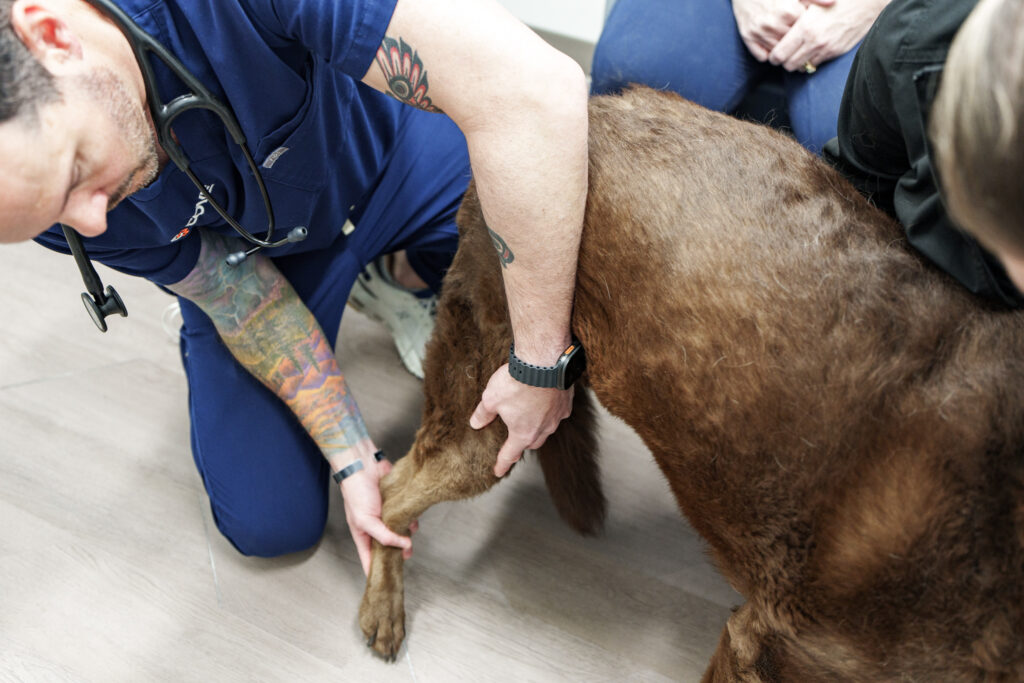
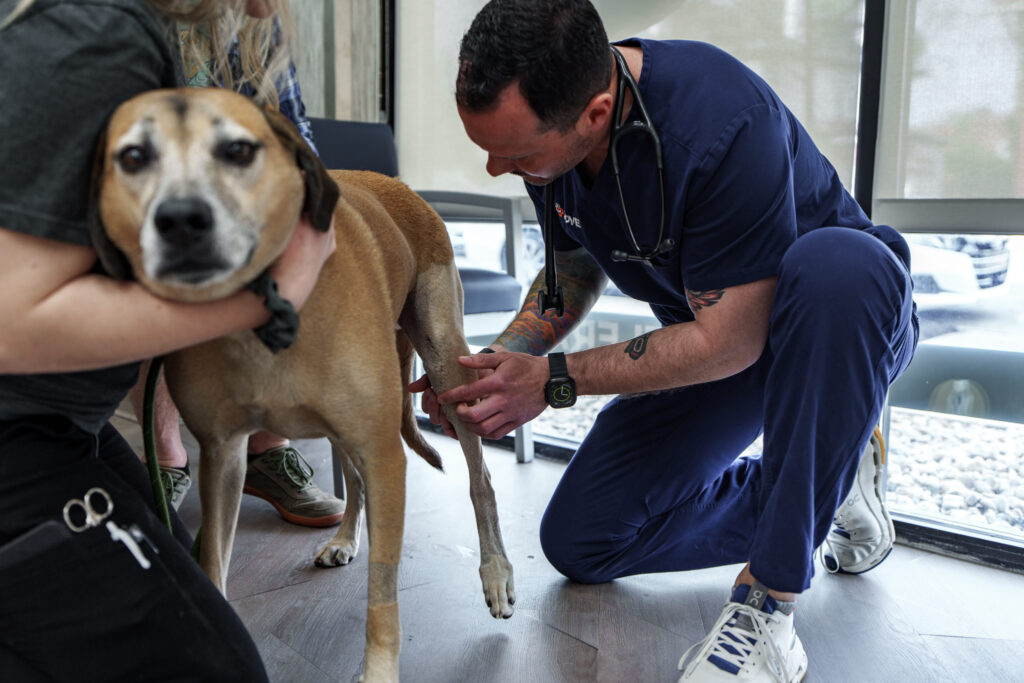
The veterinarian will ask how the limp started, whether it is constant or intermittent, and whether another injury or medical condition is present. The orthopedic examination may include gait observation, palpation of the entire limb, assessment of joint swelling and range of motion, and comparison with the opposite leg.
Cranial Drawer and Tibial Thrust
Cranial drawer is abnormal forward motion of the tibia relative to the femur. Tibial thrust describes forward tibial movement produced when forces pass through a CCL-deficient knee. Either finding can support the diagnosis. Sedation is sometimes helpful because muscle tension may hide instability, especially with a partial tear.
Radiographs and Other Testing
Radiographs do not directly show the CCL the way they show bone, but they can reveal joint swelling, arthritis, fracture, bone changes, and other possible causes of lameness. Properly positioned radiographs are also used for surgical planning when a bone-altering procedure such as TPLO is considered. Additional imaging or tests may be recommended for an unusual or complex presentation.
Meniscal Injury and CCL Disease
The menisci are cartilage structures that distribute load and absorb shock inside the knee. Instability after a CCL tear can damage a meniscus, especially the medial meniscus. Meniscal damage may occur at the time of the ligament injury or later. It can contribute to clicking, pain, or lameness that persists or returns.
The meniscus is evaluated during surgical treatment, and damaged tissue may be treated when indicated. A new decline after early improvement should be reported to the veterinary team.
Arthritis After a CCL Tear
Inflammation and instability contribute to osteoarthritis. Arthritis can progress whether the injury is treated surgically or nonsurgically. Stabilizing the knee may improve function and address an important driver of pain, but no procedure removes all existing arthritis or guarantees that it will stop progressing.
Long-term care may include weight management, appropriate exercise, rehabilitation, and a veterinarian-directed arthritis plan.
Treatment Options for CCL Injuries
Surgical Management
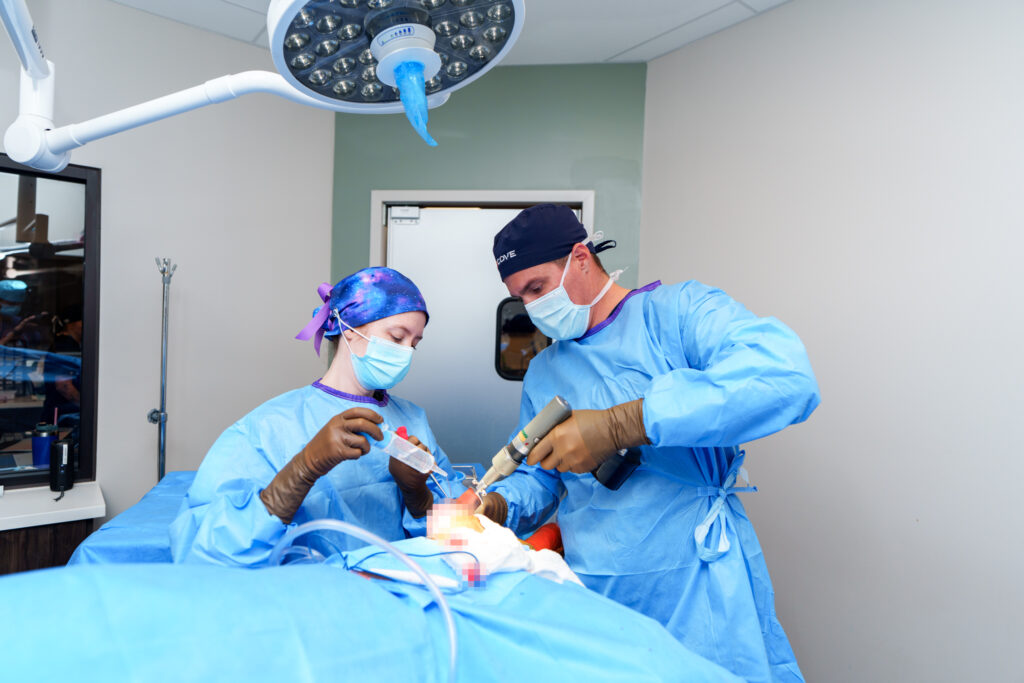
Surgical options include tibial plateau leveling osteotomy (TPLO), tibial tuberosity advancement (TTA), and extracapsular or lateral suture stabilization. These procedures address instability in different ways. The choice depends on the dog’s size, age, activity, anatomy, health, degree of instability, other joint findings, and the surgeon’s assessment and experience.
TPLO surgery changes the mechanics of the knee by rotating the tibial plateau and securing the bone with a plate and screws while it heals. It is an option for many dogs, but it is not automatically the right choice for every CCL injury.
Nonsurgical Management
Selected dogs may be managed with controlled activity, weight management, rehabilitation, and veterinarian-prescribed medication. Nonsurgical care does not repair the torn ligament, and persistent instability may continue to affect comfort and arthritis. Braces or injectable therapies may be discussed in some cases, but suitability and evidence vary.
Do not give human pain relievers or use leftover medication without veterinary direction.
When Is TPLO Considered?
TPLO may be considered when a confirmed or strongly suspected CCL injury creates clinically important instability, pain, or loss of function. Patient size and activity matter, but so do age, overall health, knee anatomy, arthritis, other limb problems, and the owner’s recovery goals and home setup.
Online information cannot determine whether an individual dog needs TPLO. An orthopedic consultation should compare the expected benefits, limitations, alternatives, risks, and recovery requirements.
What to Ask at an Orthopedic Evaluation
- Which findings support a CCL injury?
- Does the tear appear partial or complete?
- Is meniscal damage suspected?
- What treatment options fit this dog, and why?
- What role do arthritis and anatomy play in the recommendation?
- What testing, recovery restrictions, and rechecks should be expected?
- Which changes should prompt a call or emergency visit?
CCL Evaluations at COVE Pet Care
COVE Pet Care evaluates canine knee injuries for families in Central Ohio, including Columbus, Clintonville, and Delaware. The team reviews the history and available records, examines the knee, explains the diagnosis and options, and builds a patient-specific plan.
Learn about orthopedic surgery and CCL consultations at COVE, or contact COVE Pet Care to ask about an evaluation.