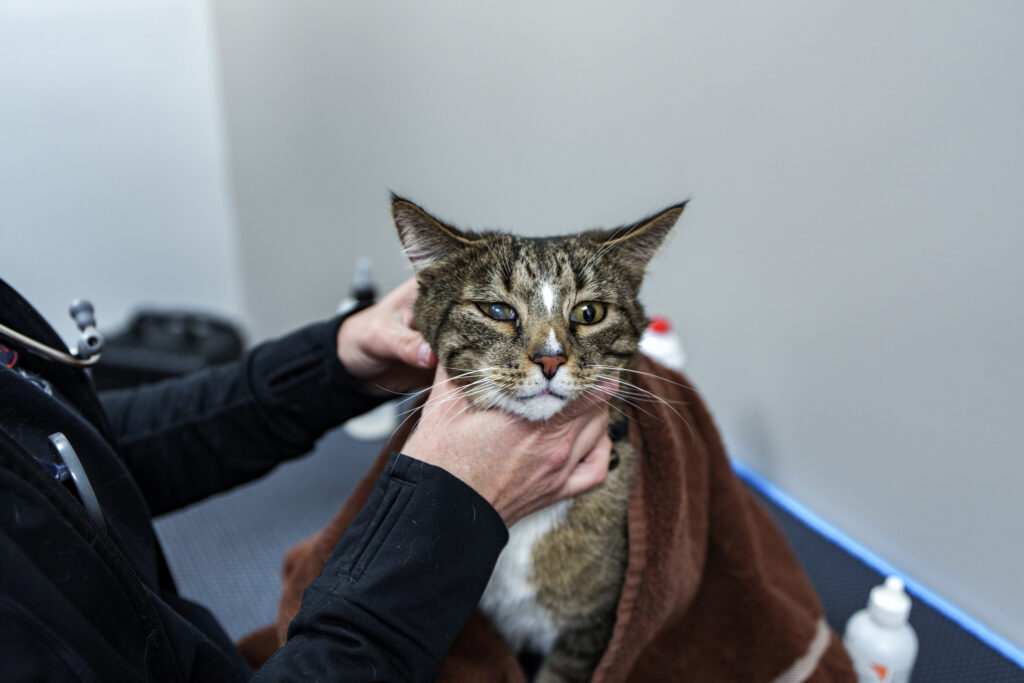
A red eye, squinting, or discharge is easy to notice. The cause is hard to find at home. These signs can come from simple irritation, an ulcer, dry eye, swelling inside the eye, glaucoma, or an eyelid problem. Some causes are painful and urgent. Waiting can put sight at risk.
Call a vet soon if your dog holds an eye closed or seems to be in pain. A cloudy eye, uneven pupils, an injury, or lost sight also need prompt care. Human redness drops, old ointment, and home cures are not safe. They can delay the right care.
The short answer
Redness, squinting, and discharge are signs, not a diagnosis. A vet may test tears, stain the cornea, and check eye pressure. These quick tests help find the source of pain. Care depends on the cause. Call right away if the eye is cloudy, injured, bulging, or linked with a change in sight.
What to note before the exam
Look at both eyes in soft, clear light. Note the color and amount of any fluid. Write down when the signs began and if they come and go. Watch for face rubbing, fear of light, less food, or low play. Tell the vet about all drops and pills. Do not clean the eye with soap. A warm, damp cloth may wipe crust from the fur if your pet is calm and the eye is not hurt.
When in doubt, call. It is safer to ask early than to miss a sore eye.
What the signs may look like
Owners often notice more than one change at the same time:
- Red or prominent blood vessels in the white of the eye
- Squinting, blinking rapidly, or holding one eye closed
- Clear tearing, stringy mucus, yellow-green discharge, or crusting
- Rubbing the face on furniture or pawing at the eye
- Swollen eyelids or tissue around the eye
- A blue, gray, or white area on the cornea or behind the pupil
- A pupil that looks larger, smaller, or shaped differently than the other
- Light sensitivity, hiding, reduced appetite, or unusual quietness
The type of discharge gives clues, but it does not prove the cause. Clear tears may come from pain, a blocked tear drain, or an eyelid problem. Thick mucus is common with dry eye. Infection and swelling can look much the same. The eye needs a direct exam.
Common causes of redness, squinting, and discharge
Corneal irritation or ulceration
The cornea is the clear front surface of the eye. A scratch, foreign material, abnormal eyelash, infection, or impaired healing can create an ulcer. Dogs with ulcers often squint, tear, rub, and develop redness. A cloudy or blue spot may appear as swelling develops in the cornea. Deep or infected ulcers can progress quickly and may threaten the integrity of the eye. See the guide to corneal ulcers in dogs and cats for diagnosis and treatment details.
Dry eye
Keratoconjunctivitis sicca, commonly called dry eye or KCS, occurs when the tear film is inadequate. The eye may look red and irritated, and the discharge is often thick or stringy. Chronic disease can cause corneal pigmentation, scarring, recurring ulcers, and reduced comfort. Most affected dogs require ongoing monitoring and treatment rather than a one-time medicine.
Conjunctivitis
Conjunctivitis means inflammation of the pink tissue lining the eyelids and covering part of the eye. Allergic irritation, infection, foreign material, eyelid disease, tear-film problems, and other disorders can all inflame this tissue. In dogs, “pink eye” is a description rather than a complete diagnosis. Treating conjunctivitis without identifying the underlying cause may leave a painful corneal or internal-eye problem unaddressed.
Uveitis
Uveitis is swelling inside the eye. It can cause redness, pain, cloudiness, and a small or odd-shaped pupil. Sight may also change. Causes include infection, immune disease, injury, lens disease, cancer, and illness elsewhere in the body. The vet may need to check more than the eye.
Glaucoma
Glaucoma is high pressure inside the eye and can be intensely painful. The eye may be red, cloudy, enlarged, or associated with a dilated pupil and reduced vision. A dog may seem lethargic, nauseated, or uninterested in food. Suspected glaucoma requires emergency care because pressure-related injury can become irreversible. Review the warning signs of glaucoma.
Eyelid, lash, and tear-drainage problems
Rolled lids, odd lashes, lid growths, poor blinking, and blocked tear drains can bother the cornea. Tears may also spill down the face. The problem may affect one eye more than the other. Medicine helps some dogs. Others need a procedure or surgery to protect the eye.
When is a red or squinting eye an emergency?
Seek same-day or emergency veterinary care when redness or squinting is accompanied by:
- Sudden vision loss or disorientation
- An eye that is bulging, enlarged, displaced, or injured
- A deep wound, embedded object, or chemical exposure
- Marked cloudiness or a visible defect on the cornea
- Blood in the eye
- A suddenly dilated or misshapen pupil
- Severe pain, vomiting, or rapid worsening
When you are unsure, call a veterinary team and describe the changes. The broader pet eye emergency guide explains what to watch for and what to do while arranging care.
How vets find the cause
An eye exam begins with the lids, blink, tears, cornea, pupils, and sight. The vet also looks inside the eye. Common tests include:
- Schirmer tear test: measures aqueous tear production
- Fluorescein stain: highlights defects in the corneal surface and can help assess tear drainage
- Tonometry: measures pressure inside the eye
- Magnified exam: helps localize inflammation or structural change
- Dilated retinal exam: checks the lens, vitreous, retina, and optic nerve when appropriate
Tests are chosen for each pet. Eye pressure may be low with uveitis but high with glaucoma. Both can cause redness and pain. Corneal stain is also important. An ulcer changes which medicines are safe.
Treatment depends on the diagnosis
There is no single medicine for every red eye. Care may include wetting drops, germ-fighting medicine, pain relief, pressure control, or a collar. Some pets need care for a whole-body illness or surgery. Steroid eye drops can help certain forms of swelling. They can be unsafe with an ulcer or some infections. Never start them without a vet exam.
Give every medicine exactly as prescribed and attend recommended rechecks. The appearance of an eye can improve before an ulcer has healed or pressure has stabilized. If the eye becomes more painful, cloudy, swollen, or visually impaired during treatment, contact the veterinary team immediately.
When specialist exam helps
A primary vet may refer when the cause is not clear or the problem is severe. Repeat disease, threatened sight, advanced tests, and possible surgery are other reasons. A board-certified specialist has advanced eye training. Read what veterinary eye specialists do and when referral may help.
For COVE’s specialty eye-care capabilities, team information, locations, and verified contact details, visit the COVE Ophthalmology service page. An online article can help you recognize concern, but only an exam can identify why your dog’s eye is red, squinting, or producing discharge.