Eye problems can change fast in dogs and cats. Mild signs in the morning may turn into severe pain by night. Some problems can harm sight within hours. Pets cannot tell us what they see or how much an eye hurts. Changes in the eye or in behavior need close attention.
Get help right away for sudden vision loss, severe pain, an eye injury, or a bulging eye. Blood in the eye is also urgent. So is an eye that has moved out of place. Online information cannot find the cause or replace an exam. Do not use human drops, old medicine, or home remedies unless a vet tells you to.
The short answer
Call a vet if an eye change starts fast, looks painful, or affects sight. Keep your pet calm and stop rubbing if you can do so safely. Do not press on the eye or pull out a stuck object. The vet team may ask what happened and when the signs began. Early care may save sight, reduce pain, or protect the eye.
What to tell the vet team
Say when you first saw the change. Tell the team if one eye or both eyes are involved. Share any known fall, scratch, bite, plant contact, or spill. Note if your pet can still find food and walk through a room. Bring the package from any chemical that touched the eye. Bring a list of all drugs your pet takes. These facts help the team plan safe first steps.
If signs change as you travel, call the team again. New pain or lost sight may change the plan.
Signs of a pet eye emergency
Contact a vet promptly if you notice any of the following:
- Sudden blindness, disorientation, or bumping into objects
- Marked squinting, holding the eye closed, or obvious sensitivity to light
- A very red eye, especially when redness begins suddenly
- A cloudy, blue, or white change that appears quickly
- A pupil that is suddenly enlarged, unusually small, misshapen, or different from the other pupil
- An eye that looks enlarged, bulging, displaced, or out of its socket
- A visible cut, puncture, foreign object, or wound near the eye
- Blood inside the eye or uncontrolled bleeding around it
- Sudden swelling of the eyelids or tissues around the eye
- Severe discharge combined with pain, swelling, or vision change
Vomiting, lethargy, hiding, restlessness, loss of appetite, or crying can accompany severe eye pain. Cats may simply become quiet or resist touch around the head. A pet that is still eating and walking normally can nevertheless have a serious eye problem.
Why eye emergencies cannot wait
The cornea, lens, retina, and optic nerve are delicate. Harm in one part can quickly affect another. A deep ulcer can break open. High pressure from glaucoma can harm the retina and optic nerve. A detached retina can stop sight. Early care may protect comfort, the eye, or useful vision.
The Merck Veterinary Manual eye-emergency guide lists several urgent problems. They include eye wounds, acute glaucoma, a loose lens, a detached retina, and sudden blindness.
Common emergencies vets check
Trauma and foreign material
Claws, sticks, plants, dirt, blunt force, and car injuries can harm the eye. Even a small wound may be deeper than it looks. Do not pull out an object that is stuck near the eye. Never press on an injured eye.
Corneal ulcers and perforations
A corneal ulcer is a defect in the clear surface of the eye. Typical signs include squinting, tearing, redness, rubbing, and a cloudy or blue spot. Some ulcers remain superficial, while others deepen rapidly because of infection, inflammation, trauma, or impaired healing. Read more about corneal-ulcer symptoms, testing, treatment, and surgery.
Acute glaucoma
Glaucoma is abnormally high pressure inside the eye. Affected eyes may be red, cloudy, enlarged, painful, or associated with a dilated pupil and sudden vision loss. Nausea, vomiting, and low energy may be mistaken for a stomach problem. Because prolonged pressure can damage vision, possible glaucoma needs emergency exam. Learn about glaucoma warning signs and treatment.
Sudden blindness or retinal disease
A pet that suddenly bumps into things or cannot find food and water needs quick care. The same is true for new fear or confusion. Causes may include a detached retina, glaucoma, nerve disease, swelling, poison, or brain disease. Dogs may also develop sudden acquired retinal degeneration syndrome. Learn about sudden blindness and SARDS in dogs.
Eye displacement
An eye pushed forward out of its normal position is called proptosis. It can occur after trauma and is an immediate emergency. Keep your pet from rubbing, avoid pressure on the eye, and leave immediately for veterinary care. The tissues dry quickly, so the veterinary team may give specific instructions while you are traveling.
Chemical exposure
Cleaning products, sprays, powders, and other irritants can injure the ocular surface. If exposure occurs, call a vet or animal poison resource right away. Be ready to identify the product and follow professional instructions for flushing or transport. Do not try to neutralize one chemical with another.
What to do while arranging care
- Call ahead. Describe what happened, when it happened, which eye is affected, and the signs you see. The team can direct you to the appropriate level of care.
- Prevent rubbing. Use an Elizabethan collar if one is available and can be placed without pressing on the injured area.
- Keep your pet calm. Limit running, jumping, and rough handling. Use a carrier for cats and a leash for dogs when safe.
- Bring helpful information. Take the product container after a chemical exposure, and bring current medicines and relevant records if readily available.
- Follow the veterinary team’s instructions. Advice may differ depending on whether the concern is trauma, a chemical, an embedded object, or sudden medical disease.
Do not delay care to take photos or search for a home cure. Do not wait for a routine visit when urgent signs are present. Never give medicine meant for another pet. Do not use human “redness relief” drops. Some products can hide signs or make an eye problem worse.
What happens during an urgent eye exam?
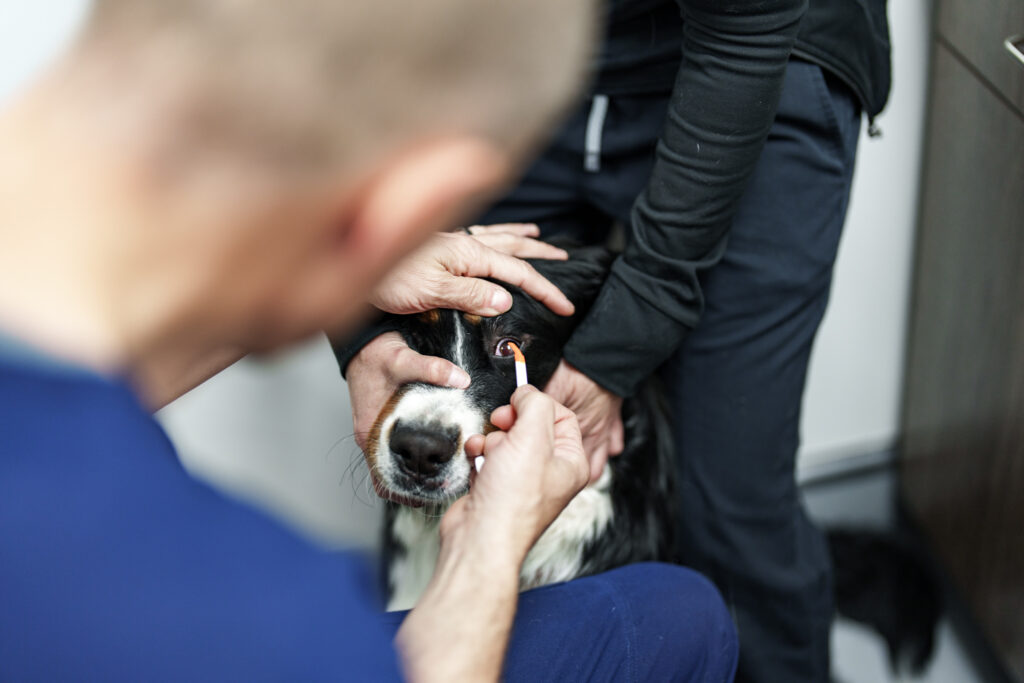
The vet first checks overall health, pain, sight, pupils, and eye position. Tests may measure tears and eye pressure. A stain can show a corneal wound. A close exam, eye ultrasound, or retinal check may also help. Pain relief and eye protection may begin before every question is answered.
A primary or emergency vet may start care and plan follow-up with an eye specialist. Major injuries, deep ulcers, glaucoma, lens problems, and retinal disease may need this added skill. Surgery is another reason for referral. COVE’s guide explains when a pet should see a veterinary eye specialist.
Protecting comfort and vision
Some eye emergencies respond well when treated early, while others carry a guarded outlook even with appropriate care. The immediate goals may include relieving pain, protecting the eye, controlling infection or pressure, and preserving as much vision as possible. No online symptom list can determine the likely outcome for an individual pet.
If you are concerned about an eye change, contact a veterinary team for guidance. For information about specialist exams, tests, treatment options, and verified Central Ohio contact details, visit COVE’s Veterinary Ophthalmology service page.