Sudden blindness is scary for a dog and the whole family. Some causes hurt and need care right away. Other causes are painless but still urgent. A fast exam can find the problem, protect the other eye, or reveal illness elsewhere in the body.
Call a vet now if your dog suddenly bumps into things or cannot find a door. New fear, confusion, or pupils that stay wide are also urgent. A red, cloudy, large, injured, or very painful eye is an emergency. Do not give human medicine or old eye drops.
The short answer
Fast vision loss can start in the eye, the optic nerve, or the brain. Some causes can be treated, while others cannot. Eye pressure, a retinal exam, blood pressure, and an ERG may help find the cause. Even when sight cannot return, most dogs can learn to move safely with calm support.
Keep your dog safe while you seek care
Use a leash, even in a fenced yard. Block stairs, pools, and sharp edges. Keep food and water in their usual spots. Speak before you touch your dog so you do not cause a startle. Do not move large items unless you must. Bring a list of all drugs and health problems to the visit. Tell the vet when you first saw the change. Do not wait to see if sight comes back on its own.
How sudden blindness may appear at home
- Bumping into furniture, walls, or door frames
- Freezing at stairs, curbs, or changes in flooring
- Difficulty finding food, water, toys, or family members
- Startling when approached
- Reluctance to move in dim light or an unfamiliar room
- Keeping the nose close to the floor and relying more on scent
- Wide pupils that respond poorly to light
- New anxiety, vocalization, clinginess, or withdrawal
Dogs use hearing, smell, memory, and whiskers to cope. A dog may move well at home but struggle outdoors. Moved furniture can also reveal the loss. These skills can make slow vision loss seem sudden. An exam helps show if sight changed in hours or over a longer time.
Why urgent exam matters
Acute glaucoma, retinal detachment, inflammation, lens displacement, trauma, and neurologic disease can all cause rapid vision loss. Early treatment may relieve pain, preserve remaining sight, or prevent the second eye from being affected. Even when vision cannot be restored, the diagnosis guides comfort and safety.
The Merck Veterinary Manual eye-emergency guide lists sudden blindness as urgent. A detached retina, glaucoma, and a loose lens also need prompt care.
SARDS: sudden acquired retinal degeneration syndrome
SARDS causes fast and lasting blindness in dogs. The retina stops working over days to weeks. At first, it may still look normal during an exam. The pupils often stay wide. The dog may have little or no clear sight response.
Some dogs drink, urinate, eat, pant, or gain weight more than usual. Not every dog has these signs, and they do not prove SARDS. SARDS is not thought to hurt. It is not a cataract. Removing the lens cannot make a damaged retina work.
An electroretinogram, or ERG, checks how the retina responds to light. It is a key test for SARDS. The Merck Veterinary Manual guide to SARDS notes fast vision loss. The retina may look normal at first, while the ERG response is very low or gone.
Retinal detachment
The retina is the light-sensing layer at the back of the eye. It can pull away from the tissue that feeds it. Causes include high blood pressure, swelling, infection, immune disease, injury, birth defects, and bleeding. One or both eyes may be affected. The split may be partial or full.
A blood-pressure test and full health check are very important. Kidney, hormone, or heart disease can cause high pressure. Care targets the cause and, when possible, the retina. The outlook depends on how much retina has pulled away and for how long. Control of the main illness also matters.
Glaucoma
High pressure inside the eye can damage the retina and optic nerve. The eye may be red, cloudy, enlarged, or associated with a dilated pupil. Dogs can show squinting, nausea, vomiting, lethargy, or poor appetite. Glaucoma is painful and requires emergency pressure measurement and treatment.
Read more about glaucoma warning signs and emergency treatment goals. A normal-looking second eye may also require risk assessment in dogs with primary glaucoma.
Optic-nerve and brain disease
Visual signals travel from the retina through the optic nerves and brain. Swelling, germs, immune disease, cancer, bleeding, a stroke-like event, or injury can block that path. The eyes may look normal even when the dog cannot see.
Poor balance, weakness, fits, odd eye moves, or less awareness can point past the eye. Tests may include blood work, scans, or a spinal-fluid test. An animal nerve specialist may also help.
Lens displacement and cataracts
A lens that moves out of place can block eye drainage. It may cause glaucoma, swelling, pain, or poor sight. Owners may see a curved line or a shaking shape behind the pupil. A vet exam is still needed to locate it safely.
Cataracts usually progress more gradually, although diabetic cataracts can develop quickly. A cataract blocks light at the lens; SARDS and many retinal disorders affect the light-sensing tissue behind it. Learn how a specialist distinguishes these problems in the guide to cataracts in dogs and surgical exam.
Tests used to locate vision loss
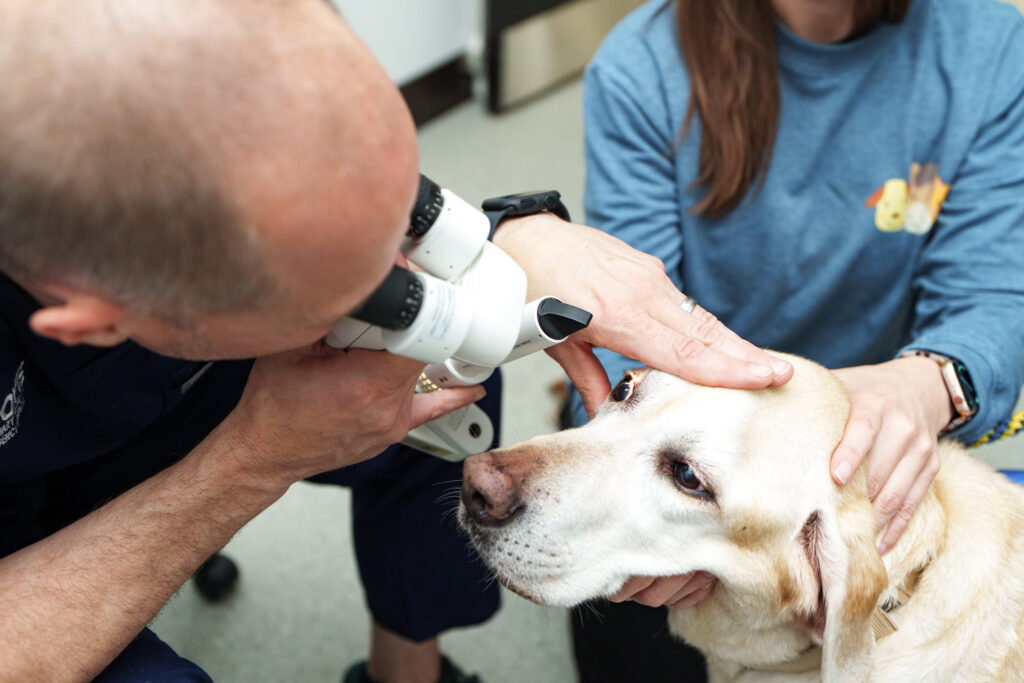
The vet watches how the dog moves and checks sight, reflexes, pupils, and eye motion. A full eye exam checks the cornea, lens, pressure, retina, and optic nerve. Other tests may include:
- Tonometry for eye pressure
- Dilated retinal exam
- Ocular ultrasound when the retina cannot be seen
- Electroretinography to measure retinal function
- Blood-pressure measurement
- Bloodwork, urinalysis, and infectious-disease testing
- Advanced imaging or neurologic testing when the visual pathway is involved
The combination of tests is selected for the individual patient and the part of the visual pathway that appears abnormal.
Can vision return?
The answer depends completely on the cause and how quickly it can be treated. Some retinal detachments, inflammatory diseases, pressure problems, or lens disorders may respond when addressed promptly. SARDS currently has no treatment proven to reliably restore vision. No vet can promise an outcome before exam and testing.
Dogs often adjust well to lasting blindness. Keep furniture, food, and water in the same places. Block stairs and pools. Use gates and leashes. Speak before touch, and teach words such as “step” or “stop.” Keep ID tags current because a lost blind dog can become confused.
Getting specialist help
An eye specialist can find whether vision loss starts in the eye. The doctor may use retinal tests or ultrasound, explain care, and work with other specialists. Learn when a dog should see a veterinary eye specialist. For sudden warning signs, see the pet eye emergency guide.
For COVE’s test capabilities, team, Central Ohio locations, and verified contact details, visit the COVE Ophthalmology service page. Online information cannot determine whether vision loss is painful, reversible, or connected to another medical condition.