Dry eye in dogs is more than mild irritation. Its medical name is keratoconjunctivitis sicca, or KCS. It starts when the tear film cannot protect the eye’s surface. Without healthy tears, the eye becomes sore and red. It is also more likely to become infected or scarred.
Call a vet soon for lasting redness, thick mucus, squinting, or a cloudy eye. Sudden severe pain, a clear wound, an injury, or lost sight is an emergency. Do not use human tears, redness drops, or old eye medicine. Use only a product and plan approved for your dog.
The short answer
Dry eye means that the tear film does not protect the eye well. A quick paper-strip test can check tear flow. Most dogs need daily medicine for a long time. Wetting drops may also help. Good home care can ease pain and protect sight. A sudden rise in pain may mean an ulcer has formed.
Simple daily care tips
Give each drop at the same time each day. Wash your hands first. Wipe soft crust from the fur with the method your vet shows you. Keep the bottle tip off the eye, hair, and skin. Wait the set time between drops. Use a chart or phone alarm if the plan is hard to track. Do not stop care when the eye looks clear. Call the vet if mucus grows, the eye turns blue, or your dog starts to squint.
Bring all drops to each recheck. The team can watch how you give them and help fix any hard step.
Why tears matter
The tear film is made of water, mucus, and oil. It keeps the cornea smooth and clear. Tears feed the surface, wash away dirt, fight germs, and reduce rub from blinking. Tear glands make the watery part. Surface cells add mucus, and lid glands add oil that slows drying.
Most canine KCS involves inadequate production of the watery tear component. Poor tear-film quality, incomplete blinking, exposure, or nerve dysfunction can also leave the cornea insufficiently protected even when some tears are present.
Symptoms of dry eye in dogs
- Thick, stringy, or sticky mucus around the eye
- Recurring crusting on the eyelids
- Redness and visible blood vessels
- Squinting, frequent blinking, or rubbing
- A dull, dry, or uneven corneal surface
- Recurring conjunctivitis or corneal ulcers
- Brown-black pigment or scar tissue developing on the cornea
- Reduced vision in advanced disease
Both eyes are often affected, but one can be worse. Discharge may be mistaken for a simple infection, especially when it is yellow or green. Antibiotics may temporarily change the discharge without correcting the deficient tear film, so recurring symptoms need a complete eye exam.
What causes KCS?
Immune-mediated damage to the tear-producing glands is the most common cause in dogs. The immune system gradually reduces the glands’ ability to produce tears. Certain breeds are predisposed, but any dog can be affected.
Other causes include certain drugs, injury, or loss of tear tissue. Some dogs are born with too little tear tissue. Nerve problems can also stop tears. A dry nose on the same side may point to a nerve cause. Hormone or whole-body illness can add to the problem, so the vet checks the full patient.
The Merck Veterinary Manual overview of tear-apparatus disorders describes immune-mediated, medicine-related, congenital, and neurogenic causes of KCS.
How dry eye is diagnosed
Schirmer tear test
The Schirmer tear test measures the watery part of tears. A thin paper strip sits inside the lower lid for one minute. The vet records how far the tears travel. The result is compared with the dog’s signs, breed, medicine, stress, and eye surface.
One normal measurement does not explain every tear-film problem, and a low result should be connected to the full exam. Tear values can vary, so rechecks help show whether treatment is working.
Corneal and eyelid exam
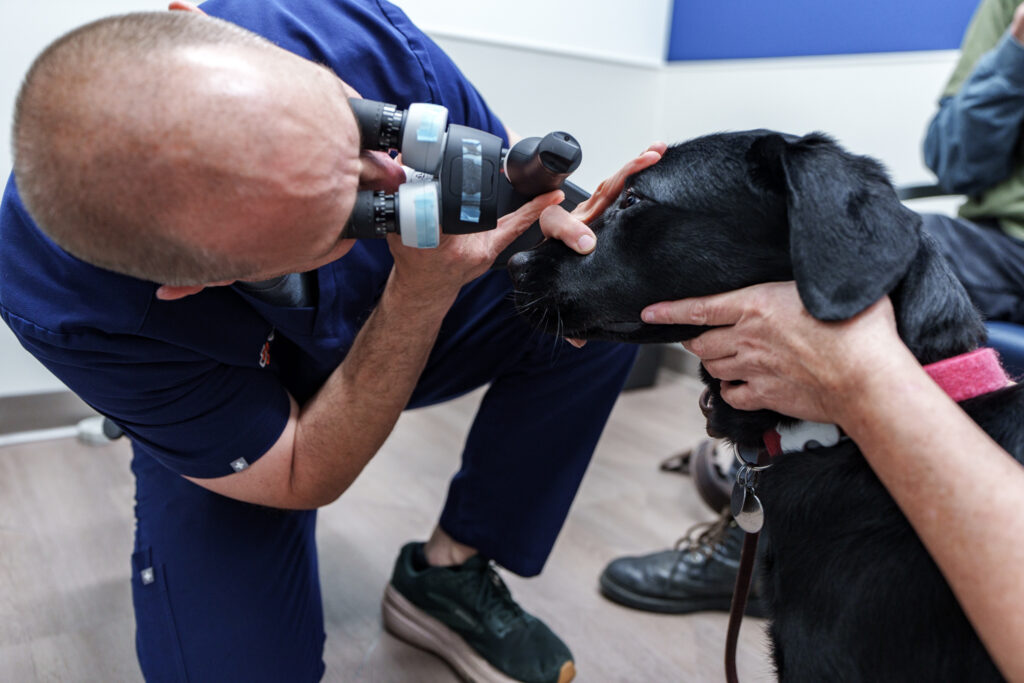
Fluorescein stain is used to look for a corneal ulcer. The vet also examines the eyelids, eyelashes, blink, third eyelid, corneal sensation, mucus, pigmentation, and tear distribution. Eye pressure may be measured, and additional tests may be recommended when infection, neurologic disease, or another diagnosis is suspected.
The guide to veterinary eye-exam tests explains these common procedures in owner-friendly terms.
Medical treatment for dry eye
Care has a few goals. It may help the glands make more tears and replace missing tear parts. It also controls swelling, treats germs or ulcers, and protects the cornea from more harm.
Prescription eye medicine can calm the immune attack and help glands make tears. It may take time to work. The dose or form may need to change. Wetting drops or ointment add moisture but do not replace the main drug. Germ-fighting medicine is used only when an infection or ulcer needs it.
Most dogs need long-term, often lifelong therapy. Stopping medicine after the eye looks better can allow inflammation and corneal damage to return. If treatment seems ineffective, the vet may reassess technique, frequency, diagnosis, formulation, eyelid anatomy, and whether enough functional gland tissue remains.
Giving eye medicine successfully
- Wash your hands and gently remove discharge with the cleaning method your veterinary team recommends.
- Keep the bottle or tube tip from touching the eye, eyelids, hair, or fingers.
- Place the prescribed amount inside the lower eyelid pocket without forcing the eye open widely.
- Allow the recommended interval between different medicines so one does not wash out another.
- Use a protective collar if rubbing is damaging the eye or interfering with healing.
Ask for a demonstration if dosing is difficult. More medicine is not necessarily better; consistent technique and timing are more useful than flooding the eye.
When surgery may be discussed
Surgery may be an option when severe KCS does not improve with strong daily care. One procedure moves a saliva duct from the mouth area to the eye. Saliva then adds moisture. Saliva is not the same as tears. It can cause mineral spots, wet skin during meals, or other problems.
Surgery is reserved for selected patients after diagnosis and reasonable medical options have been explored. An ophthalmologist can explain candidacy, expected care, and limitations. Surgery does not guarantee a normal ocular surface.
Complications and rechecks
Dry eye that is not controlled can cause ulcers, repeat infection, dark pigment, scars, and poor sight. New blood vessels may also grow into the cornea. Rechecks often repeat the tear test and corneal exam. Visit timing depends on how severe the problem is and how well care is working. Learn more about corneal ulcers in dogs and cats.
Seek prompt care if squinting increases, the eye becomes cloudy, discharge changes suddenly, the cornea looks uneven, or vision seems different. These signs may indicate an ulcer or another problem in addition to KCS. The article on red, squinting, or discharging eyes explains why similar symptoms can have different causes.
Long-term outlook
Many dogs remain comfortable and retain useful vision when treatment is started before severe corneal change and given consistently. The response depends on the cause, duration, remaining tear-gland function, concurrent disease, and follow-up. Online advice cannot determine which medicine or formulation is safe for an individual dog.
If your dog has recurring discharge or a diagnosed tear problem, ask whether specialist input would help. Learn when a pet should see a veterinary ophthalmologist, and visit COVE’s Veterinary Ophthalmology service page for team information, capabilities, Central Ohio locations, and verified contact details.