Uveitis is swelling inside the eye. It hurts and can harm sight. It may also be the first clear sign of illness elsewhere in the body. The eye may be red, cloudy, or held closed. Ulcers and glaucoma can look the same. An exam and eye-pressure test are key.
Call a vet soon for redness, pain, haze, an odd pupil, or changed sight. Severe pain, injury, blood in the eye, sudden blindness, or fast change is an emergency. Do not use human drops, old steroids, or home cures. An ulcer or infection can make some swelling medicine unsafe.
The short answer
Uveitis means that tissue inside the eye is sore and swollen. It can start from eye disease or from illness in the body. The vet checks pressure, the cornea, and the back of the eye. Blood tests or scans may also help. Fast care can ease pain and lower the risk of lasting harm.
What to do before the visit
Write down when the eye first changed. Note if one eye or both eyes look different. Watch for less play, less food, hiding, or pain in bright light. Bring a list of all drops, pills, and health problems. Keep your pet from rubbing the eye. A cone may help if it can be put on with no harm. Do not start old drops. Call the vet if the eye gets worse on the way.
What is the uvea?
The uvea is the dark layer with many blood vessels. It has three main parts. The iris gives the eye color and controls pupil size. The ciliary body makes eye fluid and helps with focus. The choroid feeds tissue at the back of the eye.
Inflammation of the iris and ciliary body is called anterior uveitis. Inflammation involving the choroid and nearby retina is often described as posterior uveitis or chorioretinitis. More than one area can be involved. Location affects the signs, testing, and risk to vision.
Symptoms owners may notice
- Squinting, frequent blinking, or holding the eye closed
- Redness around the eye or prominent vessels
- A cloudy or hazy appearance
- A pupil that is small, irregular, or slow to respond
- Change in iris color
- Light sensitivity
- Blood, inflammatory material, or an unusual appearance inside the eye
- Reduced vision, hesitation, or bumping into objects
Some animals become quiet, hide, eat less, or resist touch around the head. Posterior inflammation can impair vision without dramatic surface redness. A pet cannot tell you whether images are dim or blurry, so behavioral changes are important.
What causes uveitis?
Uveitis is a response to another problem, not one single disease. Possible causes include:
- Infection from fungal, bacterial, viral, parasitic, or other organisms
- Immune-mediated inflammation
- Trauma or a penetrating injury
- Lens-induced inflammation associated with cataracts or lens damage
- Cancer within the eye or elsewhere in the body
- High blood pressure, especially when the retina is involved
- Protein, bleeding, or inflammatory disease elsewhere in the body
Sometimes, full testing does not find a clear cause. Vets may call this idiopathic uveitis. “Idiopathic” does not mean the problem is mild. The eye still needs care and close checks.
The Merck Veterinary Manual guide to uveitis reviews many causes. They include germs, immune disease, injury, lens disease, and tumors.
How uveitis is diagnosed
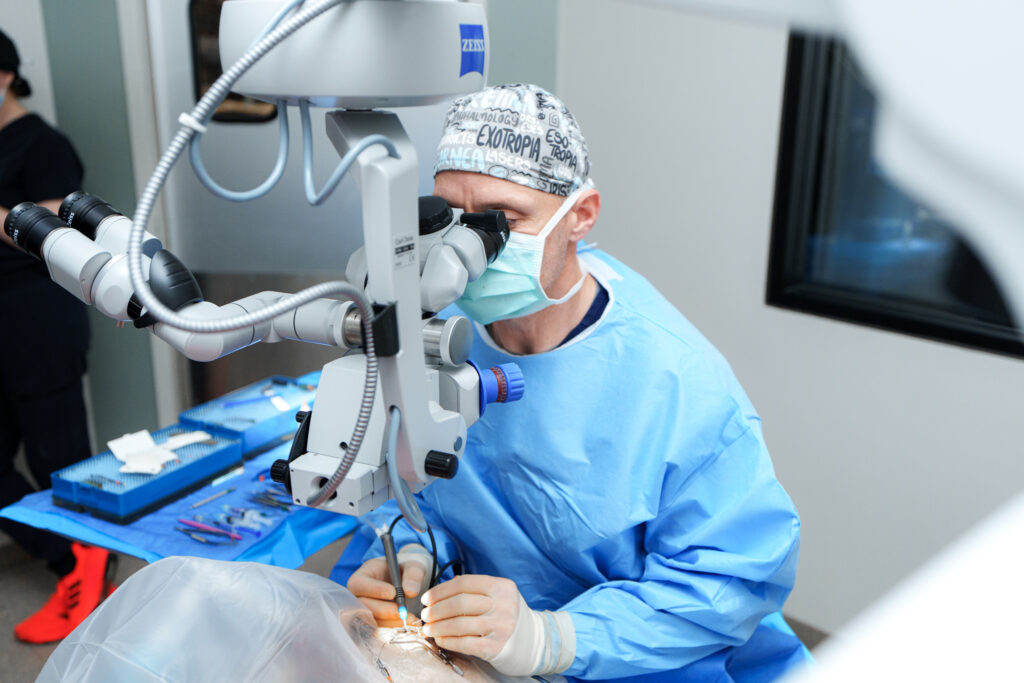
The eye exam checks sight, pupils, the cornea, eye fluid, iris, lens, retina, and optic nerve. Bright light and a close view can reveal protein or cells in the fluid. These changes can make the eye look hazy.
Tonometry measures eye pressure. Pressure is often low because swelling changes fluid flow. It can also rise if the drain becomes blocked and glaucoma starts. A bright stain checks for a corneal ulcer before some eye drugs are used.
When haze blocks the view, an eye ultrasound may show the lens, retina, eye gel, and any mass. The guide to veterinary eye tests explains what owners can expect.
Why a whole-body workup may be needed
The eyes have many blood vessels and immune cells. Infection, cancer, swelling, or blood-pressure change elsewhere can affect them. The vet uses age, species, travel, medicine, exam results, and the number of eyes involved to choose tests. These may include:
- Complete blood count and blood chemistry
- Urinalysis
- Blood-pressure measurement
- Infectious-disease testing selected for exposure and geography
- Chest or abdominal imaging
- Sampling of a mass or abnormal tissue
- Consultation with another specialty service
Not every patient needs every test. The purpose is to pursue likely causes and avoid tests that do not fit the clinical picture.
Treating inflammation and its cause
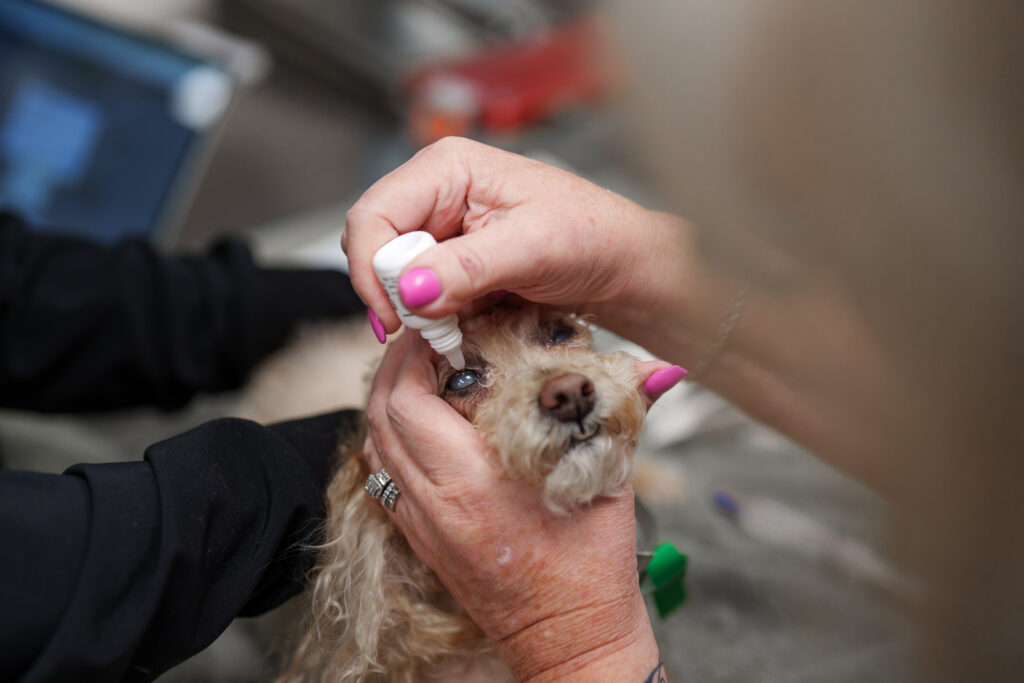
Care is planned for each pet. Medicine for swelling may be placed in the eye, given by mouth, or injected. A drug that relaxes the iris can ease painful spasm. It may also stop scar-like bonds inside the eye. Pain relief is vital.
If germs are found or are very likely, the pet may need drugs that target them. Immune disease may need drugs that calm the body’s defense system. The vet must first weigh the risk of infection. Lens disease, injury, a stuck object, or cancer may need surgery or a special plan.
A steroid eye drop should not be used until a vet has checked for a corneal ulcer and considered infection. Likewise, stopping anti-inflammatory treatment suddenly can allow inflammation to rebound. Follow the prescribed schedule and ask before changing it.
Possible complications
Uveitis can cause scars, cataracts, a loose lens, retinal harm, glaucoma, long-term pain, and lost sight. Some problems happen even with good care. Risk is higher when swelling was severe or had been present for a long time.
Rechecks let the vet measure pressure, check swelling, and change medicine. Visits may be close together at first. An eye that looks clear at home may still be swollen inside.
When is uveitis an emergency?
Seek urgent care for sudden blindness, severe squinting, blood in the eye, a markedly cloudy eye, trauma, a displaced lens, an enlarged or bulging eye, or rapid change in pupil size. Vomiting and lethargy with a red or cloudy eye can indicate severe pain or glaucoma. The pet eye emergency guide provides additional warning signs.
When referral helps
Referral may help when swelling is severe, keeps coming back, or harms sight. A cataract, glaucoma, retinal disease, or possible surgery are other reasons. An eye specialist may work with the primary vet or another service when body-wide illness is involved. Learn what a veterinary eye specialist does.
For COVE’s specialty exams, tests, treatment capabilities, team, Central Ohio locations, and verified contact details, visit the COVE Ophthalmology service page. Online information cannot identify the cause of uveitis or determine which medicine is safe for an individual pet.